Next Portland, OR speaker

Chris Williams

Foster Theater

More info
← Load previous

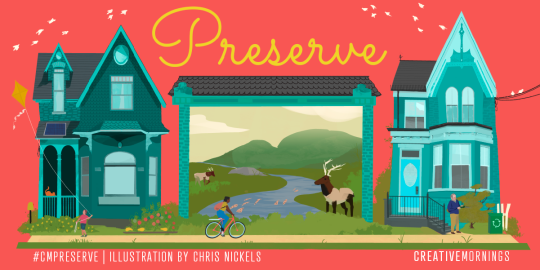
MAY’S THEME IS PRESERVE

The beauty in our world deserves to be cherished, sustained, and rediscovered. We share this life, and every day we have the opportunity to act as thoughtful participants in it.

What do we care about? What do we take for granted? Would we miss it if it disappeared?

Preservation begins with asking deep questions and turning our attention to the environment around us.

Marine biologist and explorer Sylvia Earle wrote in her book, The World is Blue, “Should we race to see how quickly we can consume the last tuna, swordfish, and grouper? Or race to see what can be done to protect what remains? For now, there is still a choice.”

Our daily habits are a mirror reflecting back what we truly care about. Our actions are key to protecting the wellbeing of our communities, cities, and planet.

Pause for a moment to notice what is being neglected and take an audit. We can break out of patterns, simplify our lives, and focus on the things that will last a long time.

Together, we can chart a brighter path into the future.

Our Charleston chapter chose this month’s exploration of Preserve and Chris Nickels illustrated the theme.
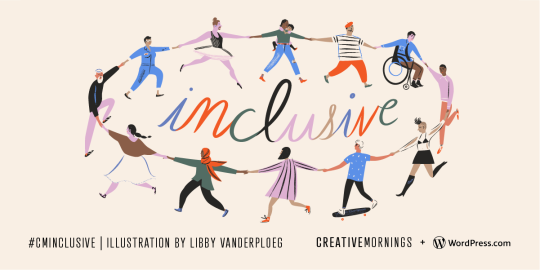
APRIL’S THEME IS INCLUSIVE

When different people come into our lives, they bring gifts.

We can blend the best of our wisdom with the best of theirs. We can teach and learn from each other to produce closer circles that foster community and commit to diversity. People who include with intention, raise their hand to do the work of embracing what is unfamiliar.

Inclusion is an attitude to consciously be open to ideas that come from outside of our settled ways of thinking or feeling. It’s about making a decision that comes from a place of love, of caring for others.

When you place inclusivity at the center of how you live, it has great power to heal, elevate new voices, and change the narrative of who belongs. As diversity advocate Vernā Myers once said, “Diversity is being invited to the party. Inclusion is being asked to dance.”

Our Grand Rapids chapter chose this month’s exploration of Inclusive, Libby VanderPloeg illustrated the theme, and WordPress.com is presenting the theme globally.

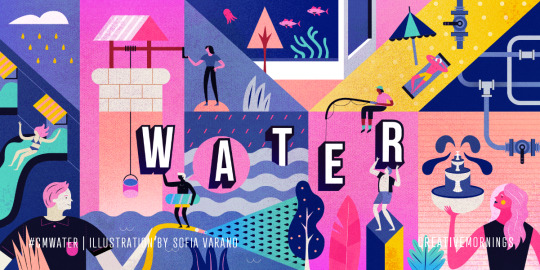
MARCH’S THEME IS WATER

It’s the main source of all life. The lifeblood element that makes up 60% of our bodies.

It’s the liquid that we don’t drink enough of, yet waste effortlessly.

It’s home to millions of species, mysteries, and undiscovered knowledge.

We know more about the stars in the sky than the depths of our oceans.

We can use it to save lives. If used foolishly, it can take lives.

We think there is an abundance, yet only one percent can be touched. If we don’t protect our waters, then what will happen to life?

Our Perth chapter chose this month’s exploration of Water and Sofia Varano illustrated the theme.

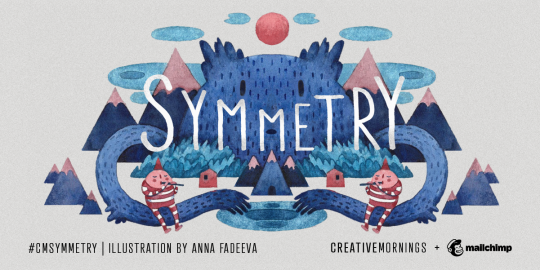
FEBRUARY’S THEME IS SYMMETRY

What do a planet, an attractive face, and a snowflake have in a common? Symmetry.

Symmetry is prevalent throughout life. You can fold a sunflower in half, stories have an arc, and the human body can bend and create mesmerizing shapes. There are also irregularities that enhances life; it adds beauty and complexity. If there’s symmetry in nature, then there must be a kind of symmetry in the way we lead our lives.

Symmetry cannot be possible without asymmetry, the same way sadness magnifies joy.

Alan Lightman wrote in The Accidental Universe, “I would claim that symmetry represents order, and we crave order in this strange universe we find ourselves in.” But chaos will happen whether we like it or not, it’s how we respond to it that either creates order or more chaos.

When in chaos, create your symmetry.

Our Saint Petersburg chapter chose this month’s exploration of SYMMETRY, Anna Fadeeva illustrated the theme, and Mailchimp is the presenting partner.

CreativeMornings Portland is back.


We hope you’re ready to help us get this going again. Because it’s not just an event. It’s a community.

And it doesn’t exist without you. (Or without coffee.)

Join us at our first event of the year on Friday, January 25 at 8:30 a.m., hosted by Portland Center Stage at The Armory.

Bring a friend. Drink coffee. Be inspired. Meet new folks. And most importantly, take the experience with you into the world when you leave.

You can RSVP starting Monday, January 21 at 9 a.m. Don’t worry—we’ll send a reminder.

This is a brand new volunteer team and we’re learning as we go. We’re still looking for:

  • Event photographer(s) for January, February & March events
  • Coffee and breakfast sponsors

Are you interested in helping out? Know someone who might be? Email portland@creativemornings.com and let us know!

We can’t wait to meet you.

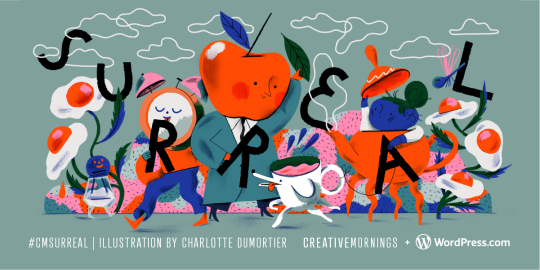
JANUARY’S THEME IS SURREAL

When you look at the artwork of Frida Kahlo or Salvador Dalí, there’s an element of surprise. Why does it feel familiar yet also otherworldly?

Surrealists sought to break free from the shackles of the rational mind and dive into the deep end of the unconscious. The canvas, then, became a mirror for what emerged out of that process. This movement was inspired by events in the 1920s on the heels of the first world war and continues to influence artists, writers, photographers, and filmmakers. This cultural and artistic movement ushered in new techniques that helped humans expand their minds.

Today, we recognize a sense of the surreal in unexpected moments in daily life. Art exhibits like Yayoi Kusama’s Infinity Room are becoming readily available, encouraging people to immerse themselves in experiences that break reality. A ballet performance or a silent meditation retreat can be a dreamlike experience.

Whether we experience a surreal moment or dabble in processes like drawing without thinking or writing without self-editing, there’s something to be learned about ourselves and what lingers under the hood of our desires to keep life orderly and controlled.

Our Brussels chapter chose this month’s exploration of Surreal, Charlotte Dumortier illustrated the theme, and WordPress.com is the presenting partner.

Part of an ongoing series highlighting the amazing people in the creative community.

Rebecca Gates is a prolific musician, curator, artist and audio editor. She has released five albums, toured internationally and appeared as a vocalist on numerous records, and she has been featured as an artist all over the US. We got a chance to ask Rebecca a few questions about travel, collaboration, and her creative process.

See Anthony Georgis’ photos and the interview below.

How do you balance all your creative roles? Do you place your energy and attention on one of those more than the others?

I think of my work as united by sound, listening, and geographies. The geography might be landscape, architecture, communities, corporeal, or emotional. So, it’s not really a question of balance of separate practices, as much as where the focus of my inquiry or action lands at any point. It’s imperative for me to maintain an active intellectual practice as well as a more ambiguous sensory based one, and the threads of different creative roles allow that, informing each other and my process as a whole. I’ve worked to move beyond being solely identified as a musician, as I’ve found it can limit (because of other’s perspectives) my opportunities to participate in projects I find compelling. That said, without playing, singing or writing, I lose access to my core point of orientation. Once when I was fretting how to quantify my experience a designer friend of mine said, “You navigate the hyper-local to the global”. It’s all about breath!

image

As someone who’s involved in more than one creative discipline, how do you stay grounded and focused on projects while traveling also seems to be a big part of your artistry?

It is an exercise in presence and discipline. The beauty of a creative practice is the opportunity to embrace complexity. That said, I constantly work to calibrate my organizational, producer, scrutinizing inclinations with my muse-y, quiet, observational, thoughtful ways.  Regarding travel, I love being completely present in a moment, amid the dynamics of a space or group of people, and I think well in motion, in liminal modes. Though travel might bring complications, it offers access to a personal creative space as well as a chance to learn from a wide range of experiences. I’ve toured off and on for many years. The life of a touring musician means we have to learn to be on the move for work, we just have long commutes.

image

What’s your dream project (and/or who's your dream project collaborator)?

What a terrific question! I am fortunate to have collaborated in a number of disciplines with great, talented people.  Oh dear, that list is long. It ranges from vocalists I’d like to sing with to any number of designers, architects, policy-makers…. I’m currently thinking about the intersection of civics, infrastructure and sound based work, who wants in on that?

What is one thing you need in order to keep doing what you’re doing? (This might be something you already have or it may be something you are still looking for.)

Being careful I don’t support a one-sided share economy, a.k.a. money. That might seem flippant but isn’t meant to be. 

A close second is the freedom to ask “Why?” and “How?” and “Why not do it better?” and “Why do it that way?”

What are your thoughts on time-travel?

The current moment and the moment where we can shift experience and opportunity are the most fascinating. I enjoy studying history but have no desire to go back, or forward. If someone will get on developing a sci-fi transporter and bring it to life, I’m all for it. As much as I adore the interlude and exposition that movement provides, there are times I’d jump at the chance to sparkle travel in seconds. So, maybe not a lot of thoughts on time-travel, but very clear desires for travel time.

Part of an ongoing series highlighting the amazing people in the creative community.

Lydia Mazer is a Senior Talent Manager and an all around bad ass. She's one of the many amazing folks who have worked at 52 Limited, our long-time supporters. She's also on the board at IPRC, helps coordinates dMob for the AIGA, and is one of the event leads for Design Week Portland. We recently caught up with her to ask her how she does everything she does.

See Anthony Georgis’ photos and the interview below.

What’s the most important superpower to have as a Talent Manager?

The ability to juggle knives, on fire, with a smile. We are in direct contact with about 40-50 people every week about things that are going on, all at different phases, trying to keep things from going sideways while managing peoples' expectations, schedules and goals. It's fun, and there's hardly a dull moment, but it is also certainly a trick to pull it off without looking like you've got one hand tied behind your back (because it's calling that candidate that got stuck in traffic on the way to their interview).


image

How has the creative landscape in Portland changed since you started working locally?

There has always been such a killer creative community in Portland, it's why I moved here. Since I've moved here, though, I've seen an increase in attracting international talent to come speak and collaborate with locals. It's been a pretty awesome transformation to watch.

Another way it's changed is that there is so much more opportunity and at the same time so much more competition! I started doing creative recruiting in 2012 and it was pretty bleak out there. I met so many awesome designers and creatives that I just couldn't help. There were no full time roles, while also having little opportunity to hop from one freelance project to another. Now the awesome folks are hard to come by and can demand freelance, contract or full time work.

There are so many new startups, agencies, offshoots and international brands here- we're really able to keep up with some other creative-heavy cities, while also offering all the stuff they don't have (hello, Mt. Hood!).

image

Do you have any tips for folks looking for new opportunities?

Network, network, network. And of course, have your portfolio filled with your best (and only your best) work. To the portfolio point, everybody needs an editor- and if it's not you, find a friend (or a recruiter!) with good taste and ask them what to keep and what to scrap. Don't make it hard for hiring managers to understand what you want or what you can do. That's the quickest way to sink your own ship.

image

Beyond your day job, you’re engaged in a lot of community and arts organizations. What’s the most rewarding thing about doing that kind of work?

I'm such a people-person, and a bit of a busybody. I really just love knowing who everyone is, what they do and what they're working on. There's always more to learn about what's going on in town and being involved with things like Design Week and dMob are great ways to do that.

Through being involved as a board member at the Independent Publishing Resource Center, I get to help steer the ship on one of the best creative resources we have in town- and who wouldn't love that?

Part of an ongoing series highlighting the amazing people in the creative community.


Randi Haugland is a designer and illustrator. She designed these tote bags you saw at the Creative Mornings Portland talk in September.

See Ashley Courter’s photos and check the interview below.

image

How does your background in studying anthropology inform your design aesthetic? Would you say there is a connection?

Definitely! In my first round of college while studying anthropology, I was taught to consider other people, cultures, and languages. It has added a filter where I ask, how will others interpret this? All designers have to do that. We are all Anthropologists in a way!

Could you talk more about your specific interests and concentration in anthropology?

I ended up taking mostly Native American studies and linguistics classes. Especially after the linguistics classes, I started to read up on how language works, and how we as humans use it. I think that’s also when my obsession with crosswords started. As for other interests, they mostly include things like antiquing, painting, reading, embroidery, book-making, and as I mentioned crosswords! Art, words and history seem to be common themes in what I like to do!

What strikes me about your work is that it’s a report of Portland’s urban history and geography in particular. How might your designs take on a different role if you were living and working in another kind of place?

Oh goodness, I think about this often. I have a personal connection because I grew up here. Also, Portland’s history is quite colorful so it’s fun to discover things about the people that used to live here, and the buildings and houses that are no longer around. It is also interesting how geography affects how people use a city. It seems like each of Portland’s 90+ neighborhoods have a personality all their own. For example, SW Portland is covered in trees, defined by winding roads, and is largely sidewalk-less. This seems to create a private and quiet existence. (I know from experience!) But, I actually think I would continue to make the exact same work if I lived in another city. I really enjoy the process of research. Of discovering things I didn’t know before about the area I live in. I love to be able to walk down a street and say, “Oh there used to be a theater here,” often to the chagrin of my friends…

image

What’s your dream project?

The illustration I did for PSU’s Portland State of Mind was pretty dreamy! I got to illustrate a Portland history timeline, what’s better than that?! I hope to continue this trend of history related projects. I will make up any excuse to go the Oregon Historical Society library. Maybe designing OHS exhibits would be a dream project!

Role models?

In design, definitely two of my professors Briar Levit and Kate Bingaman-Burt. I really admire how they approach teaching and their work in their own distinct ways. I only hope I find my voice just like they have. Also my Grandmother Nancy. I didn’t get to know her well in life, but I have gotten to know her through the pictures and things she collected through out her life. She went to college in the 40s, was a single mother starting in the 60s, and raised the ranks in her long running career at PGE in the 70s and 80s. She is the reason I was able to go to college and am able to do something I love. I try to work hard to achieve even just a fraction of what she accomplished.

Part of an ongoing series highlighting the amazing people in the creative community.The Design Kids (TDK) bridge the gap between students and industry within the Australian and New Zealand graphic design community. With an amazing team, Frankie Ratford and Yve Johnson work with second/third year students and fresh grads offering exposure, experience, and opportunities in graphic design, typography, illustration.

image

What brings you all the way from Melbourne to Portland?Good question! I run a company called The Design Kids, where we bridge the gap between college students and professionals, in the Graphic Design industry. On our site, we have studio interviews, a design directory, exhibition listings, global design competitions, an annual show (where we pair Creative Directors with graduates), workshops, jobs and internships, grad shows and so much more! We currently have around 45,000 people in our community in Australia & New Zealand, and we’re in the process of launching in the USA and Canada next. We’ll be roadtripping around for the next 2 years, building the site as we go. So hello Portland, our very first stop!

image
image

How did The Design Kids get started?I used to work for design studios as a Graphic Designer, and I found sitting at a desk wasn’t really the best version of me. At the time, I was working at Frost* Design, and I loved the company, the clients and living in Sydney but just felt generally like something was missing. After a six month trip around the world, I had a pivoting moment in Madagascar (a story for another time!), and decided even though I wanted to be in the design industry, I wanted to do more/give back so I started TDK - a platform to help graduating college students. Back in 2009 it was an online shop where we sold tees and posters of the design students work. It’s since involved into a platform to connect college students with industry and build a design community for both parties to be part of. We now provide industry knowledge, exposure and opportunities to students and graduates, with a focus on illustration, typography and graphic design. We spend 9 months a year on the road, spreading the love, doing talks, running exhibitions and facilitating workshops and design meet-ups. Basically all the good stuff!

image

What are your hopes and dreams for the long game of TDK?World domination! No, really. Its going to be fun! We’ll be roadtripping to 12 major cities in the U.S, spending a few weeks meeting people in each place, and a few weeks building the site and putting the content together. Then on to Canada, and then Europe. Then maybe Japan, and India. Who knows! I like the idea a design graduate in Portland can find out about Melbourne based studios, see what events are on to make connections, check out job listings and find out more about the industry before rocking up and getting a job! (and maybe volunteering at CM Melbourne, who knows!?)

image

Having hosted CreativeMornings in Melbourne, how similar / different does the chapter in Portland feel?

I think Melbourne and Portland feel quite similar as cities - both have a great creative community , great coffee and good vibes! Your space is very grand (and much bigger than ours!), plus I’m loving the name tags (I made loads of new friends!), but Melbourne rocks in its own way too. Plus we both have some pretty sweet donuts, so I’d say it was a tie! Thanks for having us!

image
image

Follow our design road trip around America!
@thedesignkids #tdkusa
www.thedesignkids.us

more