Join a global celebration of creativity in May. Sign up for Release Day!
Skip to main content
← Load previous

Treasure - JoĂŁo BlĂŒmel

Text by Niamh Hynes Photography by Matej Simko

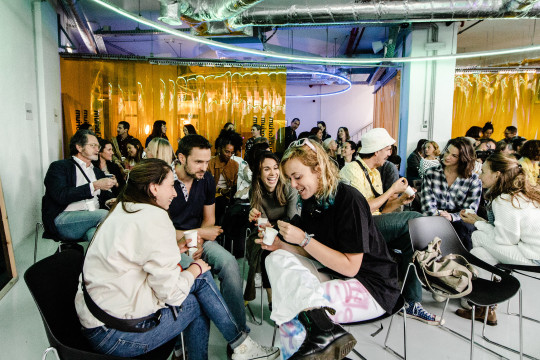
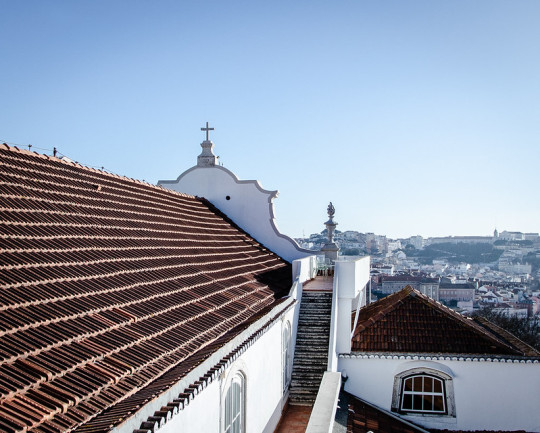
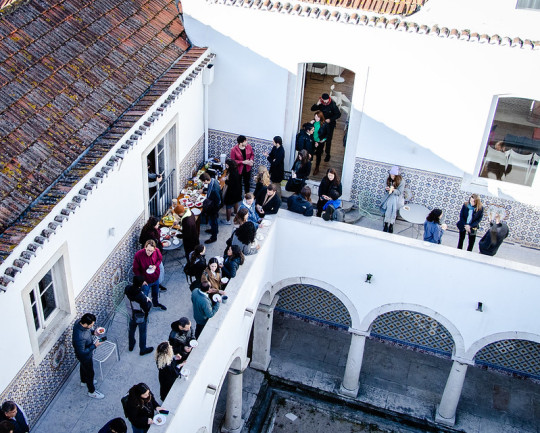
Our July CreativeMornings event in Lisbon took place at the grow.inc SPACES venue in Anjos. The seventh floor setting has a rooftop balcony, making it the perfect location to catch the morning sunshine over breakfast with a stunning view of the Lisbon cityscape. Attendees rubbed shoulders against the scenic backdrop, while enjoying fresh pastries and coffee before the presentation began.

Our July theme was Treasure, set by the Melbourne Creative Mornings team. We were asked to contemplate what treasure means to us: do we have creative treasure we are unaware of, waiting to be uncovered?

It was an appropriate title considering our guest speaker, JoĂŁo BlĂŒmel forged his career as an mind reader, uncovering answers through the hidden, subconscious mind. Joao has been a professional mind reader and entertainer for over fifteen years.

It all began when Joao discovered a modality called Neuro-Linguistic Programming (NLP) as a teenager. NLP identifies unconscious maps or patterns of behaviour. By consciously using language, NLP helps to bring about changes in someone’s behaviour. While it has become more mainstream in recent years, back when Joao discovered it, it was a niche topic.

As Joao had been practicing magic since the age of 8, he decided he wanted to combine NLP with magic to see what kind of effects he could create. This was a theme of Joao’s talk: how he combines more than one idea for unexpected and entertaining effects.

His first show was at Fabrica Braco do Prata in Lisbon, which lead to eight years of performances for general audiences. During this time, Joao performed internationally and made a name for himself outside Portugal performing at the legendary Magic Castle in LA, in 2011.

Hitting a period of writers block, he had a life changing experience when he tried VR for the first time. Now, he blends the latest advances in tech into his shows for a mind-reading experience with a difference. In 2019 he created a show called “The True Influencer”, where people on stage experience 3D effects and he uses the technology to predict people’s thoughts before they have them. 

Joao incorporates three forms of metaverse tech: VR (Virtual Reality), AR (Augmented Reality) and AI (Artificial Intelligence) into his shows. He explained how for Expo Dubai in 2020, his show combined tech, entertainment and items associated with Portuguese culture. Using augmented reality, people interacted with 3D depictions of pastel de nata or Ronaldo’s jersey, that then materialised in real life.

Other ways tech is used in his show is where via a downloadable app, Joao predicts the choices people will make before they make them. He also predicts what AI will predict ahead of time from a list of 100 items. The audience is involved in the process, making the events interactive and fun.

”Tech and live entertainment are always evolving, at least I think it should. I want to incorporate more and more tech,” Joao said, as he explained that he’s in the process of developing his first 100% metaverse show.

It seems Joao has just begun to scratch the surface of possibility with the combination of mentalism and technology: another frontier to be explored in a changing world where the duality between humans and machines continues to expand.

Text by Niamh Hynes

Photography by Matej Simko

Our July Creative Morning event in Lisbon took place at the Grow Inc. Spaces venue in Anjos. The seventh floor setting has a rooftop balcony, making it the perfect location to catch the morning sunshine over breakfast with a stunning view of the Lisbon cityscape. Attendees rubbed shoulders against the scenic backdrop, while enjoying fresh pastries and coffee before the presentation began.

Our July theme was Treasure, set by the Melbourne Creative Mornings team. We were asked to contemplate what treasure means to us: do we have creative treasure we are unaware of, waiting to be uncovered?

It was an appropriate title considering our guest speaker, Joao Blumel forged his career as an mind reader, uncovering answers through the hidden, subconscious mind. Joao has been a professional mind reader and entertainer for over fifteen years.

It all began when Joao discovered a modality called Neuro-Linguistic Programming (NLP) as a teenager. NLP identifies unconscious maps or patterns of behaviour. By consciously using language, NLP helps to bring about changes in someone’s behaviour. While it has become more mainstream in recent years, back when Joao discovered it, it was a niche topic.

As Joao had been practicing magic since the age of 8, he decided he wanted to combine NLP with magic to see what kind of effects he could create. This was a theme of Joao’s talk: how he combines more than one idea for unexpected and entertaining effects.

His first show was at Fabrica Braco do Prata in Lisbon, which lead to eight years of performances for general audiences. During this time, Joao performed internationally and made a name for himself outside Portugal performing at the legendary Magic Castle in LA, in 2011.

Hitting a period of writers block, he had a life changing experience when he tried VR for the first time. Now, he blends the latest advances in tech into his shows for a mind-reading experience with a difference. In 2019 he created a show called “The True Influencer”, where people on stage experience 3D effects and he uses the technology to predict people’s thoughts before they have them.

Joao incorporates three forms of metaverse tech: VR (Virtual Reality), AR (Augmented Reality) and AI (Artificial Intelligence) into his shows. He explained how for Expo Dubai in 2020, his show combined tech, entertainment and items associated with Portuguese culture. Using augmented reality, people interacted with 3D depictions of pastel de nata or Ronaldo’s jersey, that then materialised in real life.

Other ways tech is used in his show is where via a downloadable app, Joao predicts the choices people will make before they make them. He also predicts what AI will predict ahead of time from a list of 100 items. The audience is involved in the process, making the events interactive and fun.

”Tech and live entertainment are always evolving, at least I think it should. I want to incorporate more and more tech,” Joao said, as he explained that he’s in the process of developing his first 100% metaverse show.

It seems Joao has just begun to scratch the surface of possibility with the combination of mentalism and technology: another frontier to be explored in a changing world where the duality between humans and machines continues to expand.

Beautiful Business In the Age of Machines

Our May event took place on a cool spring morning, at Heden’s stylish co-work in Santa Apolonia. The first floor buzzed with activity as the event’s guests arrived and mingled, enjoying morning coffee and sweet breakfast treats. Heden’s balcony offered a breath of fresh air and views of the Tagus river, next to Lisbon’s cruise terminal.
image

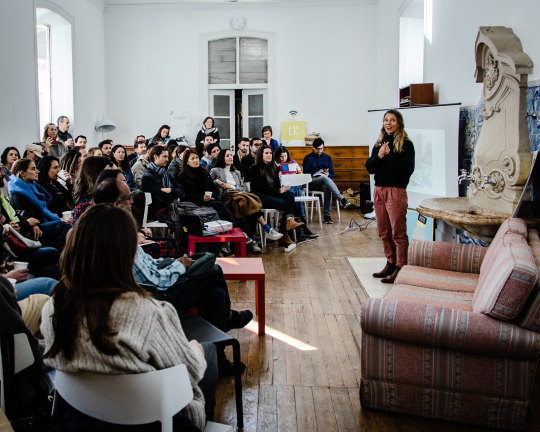
After breakfast, attendees were seated and we learned Creative Morning’s global monthly theme for May: Acceptance. We were asked to think about what acceptance means to us,  as we would explore it further with this month’s talk.

Our May speaker was German-American entrepreneur, Tim Leberect. Tim is the co-founder and co-CEO of The House of Beautiful Business, a think tank and global community that explores what a life-centered economy looks like. Tim’s talk contemplated “Beautiful Business In the Age of Machines”: what does a people-centered business look like in the age of A.I.?

image

Tim, who previously lived in Lisbon, informed us about The House of Beautiful Business’s upcoming Sintra retreat, The Dream. This festival gathers over 600 leaders, thinkers, dreamers and doers to reimagine the possibilities Web3, a decentralized economy and A.I. offer sustainability and our ability to co-create with nature.

The talk began by introducing us to the “false Gods” of business and management - ego, efficiency, winning, data, mind, intelligence, human-centered – and why a new approach is needed. “We spend 65-70% of our waking hours working, we want it to be meaningful,” Tim stated.

image

Right now, we are in the age of polycrisis, possibility and purpose. Polycrisis meaning the number of crises are augmenting and enlarging each other. AI and other tech are fundamentally changing the way we live and educate ourselves, presenting new opportunities. People are looking to create a life that’s meaningful and beautiful, not just productive; they want it to feel purposeful.

“We were an industrial, then a knowledge economy. We’re moving into a metaphysical economy. One where we understand and create reality, create meaning.”

image

He explained how consciousness shows us the purpose of everything is to honor and create life: not just human life. Although it’s something “higher”, it allows us to ground and reconnect with the body, nature and flesh. By replacing the false Gods of business with different behaviors and attitudes, we can live in a more life-centered way. This way honors ecology, beauty, and wisdom.

Although it might sound lofty, Tim explained how organizations can make this happen: through the body (embodiment), heart (embracing) and spirit (expansion).

The first step, embodiment, requires fostering our somatic intelligence. More organizations are working with dance as a means to get back into connection with the body, in a holistic and freeing way.

image

Secondly, we reach our the heart by embracing the full spectrum of human emotions (not just toxic positivity). Tim explained how this is not forcing emotions into a kind of “intelligence”, that can be used to improve productivity. A heart-centered approach might look more like people being honest about struggling, and sharing their vulnerability – something that has become more commonplace since Covid. Emotions are complex and nuanced, and it’s through their expression intimacy is formed.

It raised an interesting question: Can you ever have a truly intimate relationship with a machine? You need vulnerability, a uniquely human trait. Tim quoted musician Nick Cave’s reflection in response: “It has endured nothing. It hasn’t had the audacity to reach beyond its limitation. It has no limitation to transcend.”

image

Lastly, expansion sees corporations embracing spirituality, as the door begins to open and things that were once perceived as woo-woo become more mainstream. Tim gave the example of Shani Lehrer, a Kabbalistic healer who works with big accounting firms and CEOs, and the Psychedelic House of Davos satellite event that took place in conjunction to the WEF in 2022.

Whereas smart business was data driven, beautiful business, Tim explained, is life-centered. It involves sensing instead of planning, energy instead of productivity as a metric, using the imagination and having permission to not know the answers at all times.

image

The inspiring and uplifting talk invited countless questions from the rapt crowd. Afterwards, guests made connections and had vibrant discussions about the topic. We were left to contemplate the value of our humanness and how we can leverage it to create a more beautiful world for humans and nature, in the age of machines.

Text by Niamh Hynes

Photography by Carla Heyworth

Our May event took place on a cool spring morning, at Heden’s stylish co-work in Santa Apolonia. The first floor buzzed with activity as the event’s guests arrived and mingled, enjoying morning coffee and sweet breakfast treats. Heden’s balcony offered a breath of fresh air and views of the Tagus river, next to Lisbon’s cruise terminal.

image

After breakfast, attendees were seated and we learned Creative Morning’s global monthly theme for May: Acceptance. We were asked to think about what acceptance means to us,  as we would explore it further with this month’s talk.

Our May speaker was German-American entrepreneur, Tim Leberect. Tim is the co-founder and co-CEO of The House of Beautiful Business, a think tank and global community that explores what a life-centered economy looks like. Tim’s talk contemplated “Beautiful Business In the Age of Machines”: what does a people-centered business look like in the age of A.I.?

image

Tim, who previously lived in Lisbon, informed us about The House of Beautiful Business’s upcoming Sintra retreat, The Dream. This festival gathers over 600 leaders, thinkers, dreamers and doers to reimagine the possibilities Web3, a decentralized economy and A.I. offer sustainability and our ability to co-create with nature.

The talk began by introducing us to the “false Gods” of business and management - ego, efficiency, winning, data, mind, intelligence, human-centered – and why a new approach is needed. “We spend 65-70% of our waking hours working, we want it to be meaningful,” Tim stated.

image

Right now, we are in the age of polycrisis, possibility and purpose. Polycrisis meaning the number of crises are augmenting and enlarging each other. AI and other tech are fundamentally changing the way we live and educate ourselves, presenting new opportunities. People are looking to create a life that’s meaningful and beautiful, not just productive; they want it to feel purposeful.

“We were an industrial, then a knowledge economy. We’re moving into a metaphysical economy. One where we understand and create reality, create meaning.”

image

He explained how consciousness shows us the purpose of everything is to honor and create life: not just human life. Although it’s something “higher”, it allows us to ground and reconnect with the body, nature and flesh. By replacing the false Gods of business with different behaviors and attitudes, we can live in a more life-centered way. This way honors ecology, beauty, and wisdom.

Although it might sound lofty, Tim explained how organizations can make this happen: through the body (embodiment), heart (embracing) and spirit (expansion).

The first step, embodiment, requires fostering our somatic intelligence. More organizations are working with dance as a means to get back into connection with the body, in a holistic and freeing way.

image


Secondly, we reach our the heart by embracing the full spectrum of human emotions (not just toxic positivity). Tim explained how this is not forcing emotions into a kind of “intelligence”, that can be used to improve productivity. A heart-centered approach might look more like people being honest about struggling, and sharing their vulnerability – something that has become more commonplace since Covid. Emotions are complex and nuanced, and it’s through their expression intimacy is formed.

It raised an interesting question: Can you ever have a truly intimate relationship with a machine? You need vulnerability, a uniquely human trait. Tim quoted musician Nick Cave’s reflection in response: “It has endured nothing. It hasn’t had the audacity to reach beyond its limitation. It has no limitation to transcend.”

image

Lastly, expansion sees corporations embracing spirituality, as the door begins to open and things that were once perceived as woo-woo become more mainstream. Tim gave the example of Shani Lehrer, a Kabbalistic healer who works with big accounting firms and CEOs, and the Psychedelic House of Davos satellite event that took place in conjunction to the WEF in 2022.

Whereas smart business was data driven, beautiful business, Tim explained, is life-centered. It involves sensing instead of planning, energy instead of productivity as a metric, using the imagination and having permission to not know the answers at all times.

image

The inspiring and uplifting talk invited countless questions from the rapt crowd. Afterwards, guests made connections and had vibrant discussions about the topic. We were left to contemplate the value of our humanness and how we can leverage it to create a more beautiful world for humans and nature, in the age of machines.

Text by  

Photography by Carla Heyworth

Our April event “Building a Museum Curated by the People” held at Poolside, a Web3 hub and one of the first spaces in the Web3 district, welcomed our guests with an enjoyable breakfast experience on the outdoor terrace. Guests had the opportunity to socialize and explore the venue while sipping coffee. 

The breakfast session also featured Vanessa Teodoro’s captivating mural, which incorporated mirrors and abstract cubes to symbolize safety, transparency, and trust in the Web3 and Blockchain world. The artwork creatively represented these concepts with the use of Hacken’s turquoise color and aquatic imagery.

Following Vanessa’s presentation, Pedro Oliveira, the co-founder of Talent Protocol and partner of the event, provided insights into Talent Protocol’s mission and its collaboration with Poolside as a significant player in the Web3 district. Pedro explained how Talent Protocol supports the next generation of builders through financial, emotional, and social assistance, offering a Web3 platform where individuals can create profiles, receive subscriptions and stakes, and benefit from financial endorsements and perks.

The keynote speaker, Aleksander Herforth Rendtslev, renowned for his contributions to the museum ecosystem, was introduced to the audience. Aleksander, co-founder of Arkive, discussed the concept of individual movement to collective movement. He shared his personal journey, from his initial fascination with economics, engineering to founding his own companies. Inspired by the vision of bringing people together, Aleksander embarked on creating a collective museum using Web3 and blockchain technology to foster transparency and trust. Arkive has now grown to 1000 members and challenges conventional museum notions, emphasising community participation and art ownership.

During the Q&A session, attendees engaged in insightful discussions with Aleksander, diving deep into collection management, loan opportunities, artist applications, and governance. Aleksander highlighted the significance of open dialogue and community involvement in shaping the museum experience.

The event concluded with guests appreciating Aleksander’s thought-provoking talk, as many continued to engage in conversations about Arkive.

Touch and Transform: The Effect of Color in Our Lives

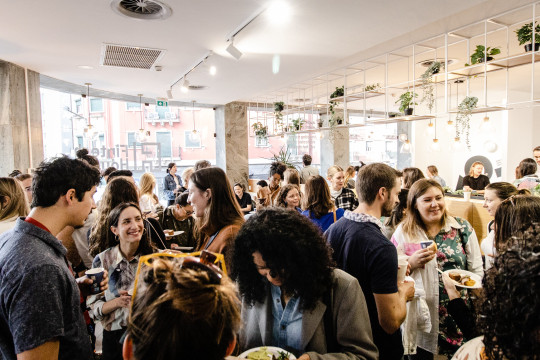
This month’s event took place at Sitio at Fintech House, where we had breakfast in the stylish cafĂ© on the ground floor. The atmosphere was already buzzing within minutes of opening the doors, as attendees chatted over the beautifully presented food and queued up for coffee at the bar (all for free, as always).

image

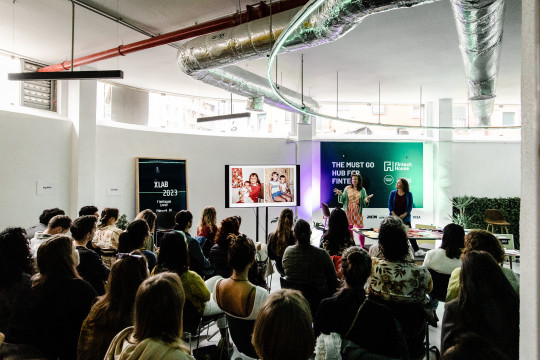
After breakfast, we headed downstairs for the talk, returning to the theme of ‘Touch’, chosen by the Lisbon chapter. We were each asked to take a small paper cup containing a folded piece of paper and some colorful sweets – an intriguing start!

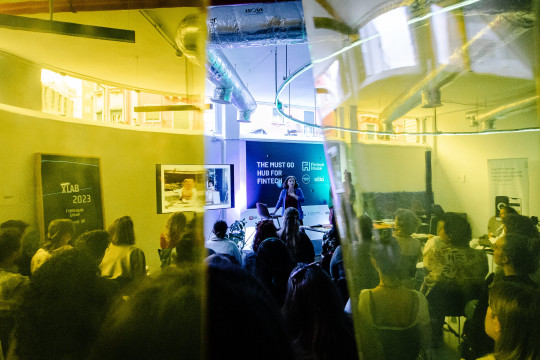
Our March speakers were Elizabeth Olwen and Susan Fischer. Elizabeth, a Canadian print and pattern designer, started by telling us a bit about her personal relationship to color. Although she loves her hometown of Toronto, the gray/brown tones are no match for her experiences of exploring Lisbon, which she likened to walking through a 3D color palette.

image

Susan is a Chilean architect, International Color Consultant, and the founder of Unbox Color. Earlier on in her architecture career, she grew sick of seeing so many blank, white, soulless rooms. This “midlife crisis” led to a rebellion, and she ended up embracing color to the point of becoming a consultant.

Susan and Elizabeth then told us about their Color Story Retreat. They’ve collaborated on an immersive creative retreat hosted in the Portuguese countryside, where guests take part in different color-led activities in a beautiful, creative setting.

We were reminded of how many color-related expressions we use in everyday life, then shown some color palettes which evoke different feelings. “Color is an opportunity for play,” Elizabeth told us, adding that it comes into so many areas of everyday life, from the way we dress to our environments, our food and the way we look at the world. Her own color story involved a childhood surrounded by patterns from the sixties and seventies: bold, retro prints which have undoubtedly influenced her work. Mustard, orange, pink and yellow are favorites.

image

Susan reflected on her childhood in Chile, spending hours selling things by the green gates outside her house. Inspiration came from the natural hues of the Andes, then later, after relocating there, the colors of Ireland. And she couldn’t resist adding a pop of color to her wedding dress.

image

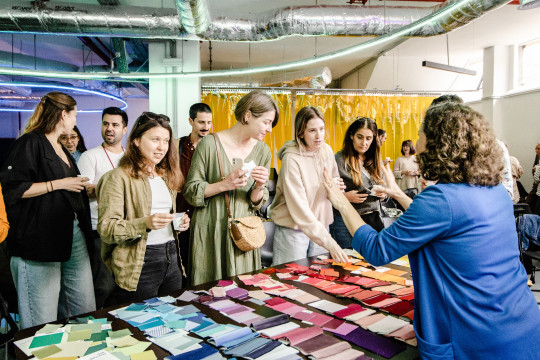
We were asked to delve into some of our own color stories, by taking out one of the sweets from the cup we’d been given earlier and telling the person next to us about our history with that color. Then Susan talked us through some common color associations and how they’re also affected by our own experiences.

image

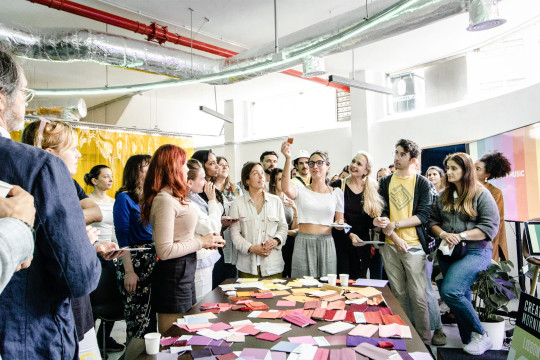
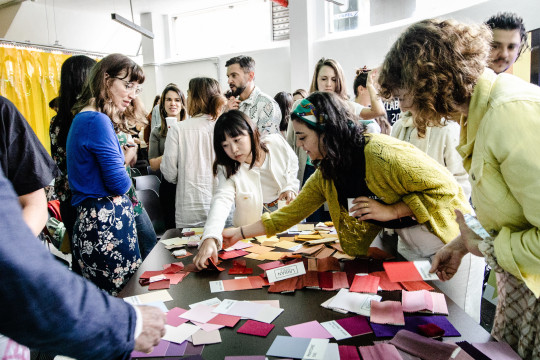
It was soon time to reveal the word on the folded paper in our cup: an adjective such as ‘energetic’ or ‘sweet’. “Let’s play with color,” our speakers announced. We were instructed to get into groups around the room with the other people who shared our word. The activities involved creating palettes together, choosing from a wealth of swatches in different colors and textures. The audience were enthusiastic about working together, some connecting on social media before saying goodbye.

image

The talk was fittingly vibrant, and the atmosphere was up there with the most popular of our events. Guests expressed how much they’d enjoyed it, and we were reminded of much we’ve bounced back since the days of the pandemic, returning to the kind of bustling, energizing events CreativeMornings is known for.

Text by  Alexis Somerville

Photography by Carla Heyworth

February marked a particularly special event for our community. The monthly theme, ‘Touch’, was chosen by the Lisbon chapter, to be used at CreativeMornings events in no fewer than 228 cities worldwide.

image

Our rapidly growing audience turned out in force to Casa do Impacto, located in a 17th century convent among the bustling hills of Bairro Alto. Guests mingled on the sunny terrace overlooking the cloisters, enjoying the complimentary coffee and breakfast. Some explored the rooftop and were treated to stunning panoramic views. 

image

Our host Irina introduced the talk and told us her personal connection with the theme: she originally came to Lisbon for a PhD on the psychological effects of physical touch. Then illustrator Emma Lopes gave us some background information on her artwork, including the beautiful logo she designed for the talk.

image

Next up was our main speaker, InĂȘs Sequeira, founder and director of Casa do Impacto. This ‘casa’ is the biggest impact entrepreneurship hub in Portugal, housing over 60 startups (as well as being our stunning venue for the morning’s event). InĂȘs described how she’d ended up in impact entrepreneurship via a career in law. Her aim was always to make a difference, but as a lawyer she was frustrated with the rigidity of the system preventing her from doing so. This was followed by a spell working more closely with the community through Lisbon’s city hall. 

image

She could see that entrepreneurship held potential for tackling social issues. “I believe that inequalities are the biggest problem that we have,” she told us, “so we have to give people the tools.” InĂȘs believes that most of us want to confront these issues but don’t know where to start, so she wanted to open the door. It hasn’t been an easy path. “Being a social impact entrepreneur is a huge challenge,” InĂȘs stated, acknowledging the impossibility of changing people’s lives in a matter of months. She and her team must play the long game to make a difference. They work to bring social issues to the centre of decisions made by corporates and public administration.

image

InĂȘs ended with some ‘impact stories’ about the work done by some of the startups in the hub. One project provided mental health support for children without families during the pandemic, while another focused on prisons, enabling inmates to gain valuable skills. The talk was followed by a Q&A with guests who were clearly inspired. Those who didn’t have to rush off to
work then enjoyed a free tour of the building’s chapel.

image

With the dream evocation of Lisbon’s theme, InĂȘs’ talk left us eager to face the day ahead. The event received a great deal of positive feedback from attendees, which is always affirming for our team of enthusiastic volunteers. We couldn’t do it without our inspiring community, which continues to welcome more and more amazing creatives every month. 

image

See you in March!

Text by  Alexis Somerville

Photography by Carla Heyworth 

Sanctuary

For the first event of the year, we returned to the beautiful space of grow.inc with a delicious breakfast and morning views over Lisbon. Our speaker, Luis AndrĂ©, took to the stage in front of a large and very attentive audience. He opened his talk with a short film about the worldwide event he founded - Trojan Horse was a Unicorn (THU) - which started life as a gathering of just 100 creators in Troia in 2013. Having previously co-founded the first Portuguese school for the CG industry and witnessed many of his students unable to find work, he wanted to help young creatives get jobs by bringing foreign talent to the area. “I do this because I care,” Luis told us. He sees his task as solving problems and added that “the way you analyse issues shows that you care.”

Luis took us through the steps of building a creative sanctuary at THU. He jokingly referred to creating the THU community as starting a cult. But underneath the joke, Luis has a serious mission. He wants to make the creative industries mainstream. He believes if creativity becomes part of society, we will have less authoritarianism and a better world.

THU is an event with no VIPS, where everybody is equal. Luis started with zero euros in his bank account and the idea of creating something non-corporate, with a deliberately silly name to go with it: ‘Trojan Horse Was a Unicorn!’ The first event was a massive success and THU created a worldwide family. “If you text someone in the world in the tribe, they will open a door for you,” Luis told us.

The following year, tickets sold out in 48 hours! But in 2015, THU had to stop. With a bank account €500,000 in debt, Luis was unable to continue the cost of putting on the event. He cried announcing the news at THU. But the community rallied. An audience member donated a cheque for $10,000 and the trend continued. Lenovo invited him out to LA, asked him what he needed and wrote a cheque for €500,000. “The community saved me because I care,” Luis said.

Luis emphasised that THU’s secret lies in attendees believing in themselves. To buy a ticket, one must have passion and be open to accountability. THU fosters a sense of community through 24/7 interaction over six days and shared experiences based on food and drink. Luis joked that free alcohol is key, as well as hosting the event in a location that is hard to leave! Working with more companies to help creatives become entrepreneurs while maintaining the original vision of THU, Luis is now planning a Storytelling THU event with Sony in Japan, as well as small online career camps, where he wants to bring humanity to the digital experience.

In the closing Q&A, Luis shared that building a community can be difficult in a city as people tend to be selfish and have their own agendas. He emphasized the emotional experience of travelling to THU, where everyone loses their layers to reveal their true selves. Luis has created a standout event focused on facing problems together, rather than just providing a temporary escape from life.

Text by Eleanor McKeown and Alexis Somerville

Photography by Carla Heyworth and Eleanor McKeown 

Spirituality is Crucial for Entrepreneurial Success

Our latest event took place on the beautiful rooftop of grow.inc Lisbon, in the centre of Intendente. We had a great turnout, with the buzz extending through the modern glass-filled interior and out to the terrace, which boasts breathtaking views of the city. People chatted and ate pastries from the local pastelaria on this cold but sunny morning.

image

We started as usual with the introduction of our sponsors. This time grow.inc: a great place to co-work, co-create and innovate alongside a community of like-minded creators. Its purpose-built spaces nurture focus work, productive meetings, and community work.

image

Soon it was time for the main talk. The global monthly theme was ‘truth’ and our speaker was the perfectly-named Truth W. Hawk. An author, filmmaker, and Hollywood creative entrepreneur, Hawk has penned plays, hosted a web series, taught at Stanford and authored the book ‘How to Succeed on Purpose’.

image

Truth’s talk was on why ‘Spirituality is Crucial for Entrepreneurial Success’. The session started with an exercise in which every attendee had an opportunity to give and receive a compliment, drawing attention to the power of presence. 

image

The goal of the next exercise was to connect energies without speaking. Truth asked everyone to turn to their neighbour and to look into their eyes, keeping their gaze soft and trying not to look away. For some of the attendees, this felt uncomfortable at first, but in the end it fostered deeper connections. 

image

Our speaker told us how he’d spent two and a half decades producing movies in Hollywood, developing creative works and deal-making. Despite the glamour, this lifestyle eventually wore him down and Truth yearned for something more meaningful in his life. It was an intuitive call to try something else and so Truth decided to embark on a journey of self-exploration – an investigation into himself. 

He travelled the world, connecting with everyone from the Maasai in Kenya to the residents of Rio. He lived in Amsterdam for three years before moving to Lisbon about a year ago, already considering the city his home… at least for now.

image

In Truth’s book ‘How to Succeed on Purpose’, he distils his life lessons and professional principles into clear, actionable concepts. 

Just after the talk some of the attendees lined up to chat with Truth, buy a book and get a personal autograph. Others continued to network on the sunny terrace. The talk and exercises had made people feel more relaxed, more grounded, and more present; ready to start the day.

Photos by Eglė Duleckytė

Text by Alexis Somerville

Storytelling as Ethos

October’s event was held at Sitio, at the new Fintech House location in Picoas. The skies may have been gloomy, but the city still looked stunning from our vantage point on the seventh floor.

image

As usual, the early start was aided by free coffee and breakfast. We were also lucky to have live music provided by Gui, an independent singer/songwriter based in Lisbon. Brought up in Mozambique with roots in Brazil and Portugal, his style draws influences from all over the world. His intuitive need to turn life experiences into narratives meant his music tied in perfectly with the theme.

image

The month’s global topic was Ethos, which our speaker Alex Couto interpreted through his knowledge of storytelling. A Lisboeta originally hailing from SetĂșbal, he came to writing by way of advertising, and now frequently combines both skills.

With an initial slide announcing that Alex would be our tour guide for the next twenty-ish minutes, he led us on a journey through the history of storytelling. Starting 33,000 years ago in France’s Chauvet Cave, he took us all the way up to the birth of social media and how we share stories today.

image

The talk covered a wide range of themes related to storytelling as ethos, from artistry to faith and interactivity. There was plenty of inspiration to be found in the artistic references, which encompassed The Twilight Zone, the films of David Lynch and the music of Childish Gambino. Alex also showed us the first ever photograph and discussed how the medium lent itself to creative expression and storytelling, exemplified later in the work of Joel Meyerowitz.

image

The Q&A was lively and brought to light a moving story about Alex’s grandfather and how he communicated education through stories. We also learned about our speaker’s extremely dedicated writing routine: “Get home, have dinner, write until I go to bed”.

image

Alex mentioned several books which helped him on his journey: Story by Robert McKee, On Writing by Stephen King and Story Engineering by Larry Brooks, as well as the website Masterclass.com. We were left with plenty of ideas and some sound creative advice: “If you have a project you’re not sure about, the only way to find out is to do it. And at the very least you’ll get a story out of it.”

Photos by Eglė Duleckytė

Text by Alexis Somerville

more