
Take a stroll around the Battery or walk through our city parks, and you’ll be surrounded by so much history, it might all start to blend together. But what if you knew the interesting quirks or epic tales of the houses on Tradd or the buildings on Broad?
During December’s “Tradition” talk, Brittany Lavelle Tulla will lift the veil on many of these spaces. As the proprietor and lead architectural historian of BVL Historic Preservation Research, she’s helped clients like the National Park Service, Charleston County Parks, and the City of Charleston unearth centuries-old stories and preserve the rich history of our region’s built and natural spaces. Brittany also teaches in the Department of Historic Preservation and Community Planning at the College of Charleston, and leads the Charleston World Heritage Coalition, a non-profit organization dedicated to gaining World Heritage recognition for historic resources in Charleston.
In 2018, Brittany was named the National Trust for Historic Preservation’s “40 Under 40: People Saving Places,” a new national list honoring 40 movers and shakers under the age of 40 from a variety of backgrounds and industries who are expanding what it means to save places and tell America’s full history.
Here, we get a sneak peek at her work, her favorite places in Charleston, and some of the wild stories she’s uncovered so far.
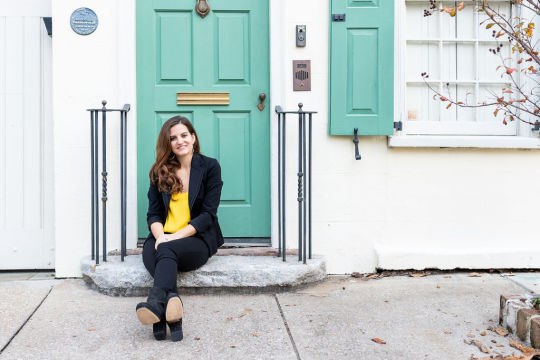
What inspired your interest in historic preservation? What do you love most about what you do?
I am fascinated with the fact that these buildings are some of the only remnants left of the generations that came before us. The buildings HUMANIZE history. We make movies of these time periods all the time – old buildings are the product of those time periods we romanticize and they encapsulate the energy and passion of hundreds (if not thousands) of people over time. I love telling those stories, helping people understand the who, what, when and how of these structures so that we can USE them in the 21st century. Old buildings are usually the bloodline of our communities and I love to help keep them relevant and ALIVE.
What’s one of the craziest/coolest stories you’ve uncovered while working on a preservation project?
I was conducting an extensive house history for a client and I uncovered that President Franklin D. Roosevelt, during his presidency, often stayed at the house as a close family friend of the owners between 1933 and 1945. Not only did he stay, but I proved he made many decisions within the walls of the Legare Street home that defined the New Deal, and ultimately changed the course of American history. Charleston was such an impactful player in the development of our nation, well into the twentieth century.
I also often get clients who say “this building doesn’t look significant,“ “no one significant lived or worked here” or “nothing important happened here,” and one of my favorite things to do is to prove them wrong. I love uncovering cool stories about every day people and putting them in their context. An Irish railroad worker may not seem so significant at first, but when you tell the FULL story of that railroad worker, of his immigration to the US in the 1860s from Ireland during the Industrial Revolution, renting a single room for his family of 6, and finally saving enough money to build a home in a predominantly Irish neighborhood, and the daughter he raised within that little house he built, went on to nursing school and as a first-generation American, ultimately became the head nurse for the U.S. Army during World War II. That railroad worker, his family and that little building he built all of a sudden comes to life in a way no one had expected. And those stories are EVERYWHERE! Every building has a story.
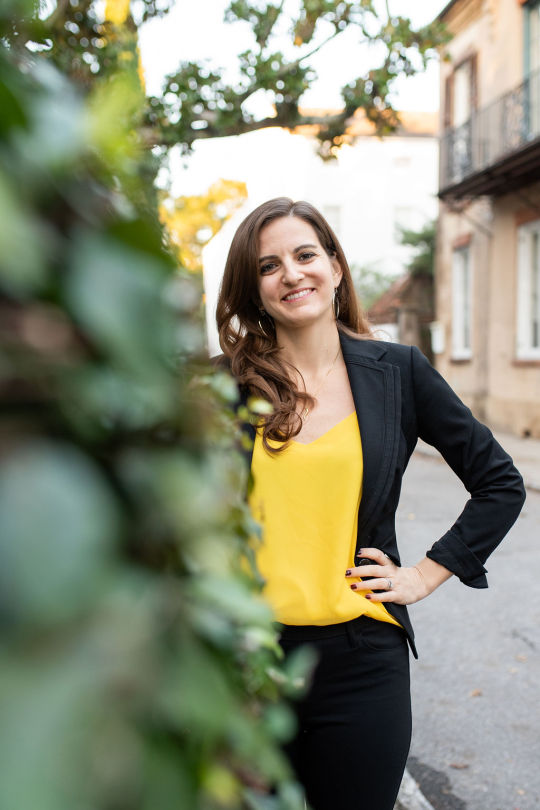
How do you start your day?
Cup of tea and if I’m lucky (that is, if I get up on time!) a little meditation.
Tell us about your proudest moment or accomplishment.
I love teaching at the College of Charleston in historic preservation and some of my proudest moments come at the end of each semester. When my students enter the classroom, they often do not know what historic preservation is, but it is so cool to see how differently they look at historic architecture when we are done and how many actually go on to switch their major to historic preservation. It is a great feeling to know that we are training a whole new group of young people to go out and be the voice for these old places and spaces that matter.
I was also honored to be included in the National Trust for Historic Preservation’s inaugural list of “40 Under 40,” a list of 40 young preservationists around the nation making change in their communities.
Who or what gives you creative inspiration?
Being outdoors, 100%. I also get inspired by visiting small towns and seeing their Main Streets and experiencing the local economy. That is where preservation is most beneficial - at the local level, helping sustain a local economy. South Carolina’s small towns are unbelievable and whenever I visit one, I am always inspired by the creativity and passion of the local community to keep their culture alive.
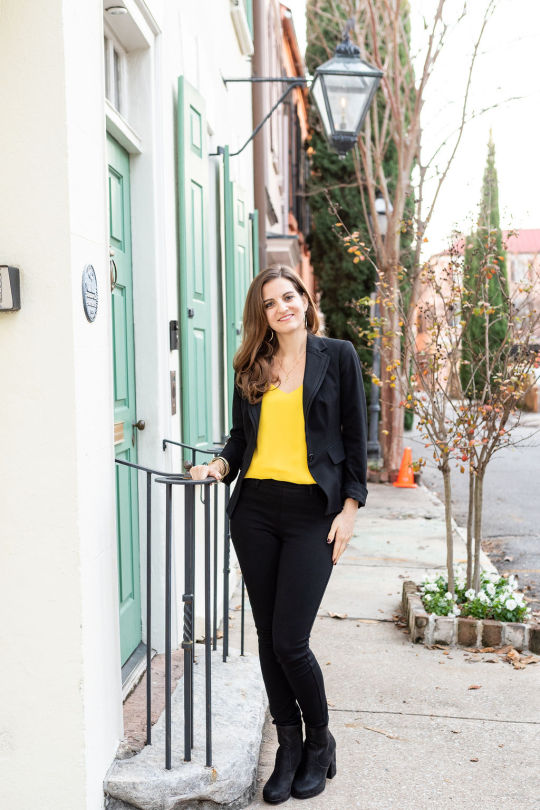
Coffee fuels our morning events. If you’re a coffee drinker, what’s your go-to order?
My go-to is a coffee with a little bit of cinnamon and coconut milk!
What is your favorite place in Charleston?
Tradd Street or Legare Street, at golden hour, on a week day, walking down the middle of the street. Just me (no tourists or carriages), the sunset and some of America’s most beautiful historic buildings.
How do you unwind or destress?
Family time (no phone!), yoga and meditation
Rapid fire:
- morning person or night owl? Night owl!
- summer or winter? Spring and Fall :)
- mountains or beach? Mountains
- pancakes or waffles? Pancakes
- fiction or non-fiction? Non-fiction! But are you surprised?
Want to learn more about Brittany’s work in historic preservation, and the incredible stories she’s uncovered? Don’t miss our “Tradition” talk on December 14th at Society Hall!