
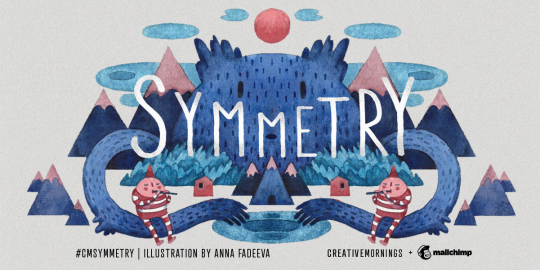
Did you ever play with a kaleidoscope as a kid? But maybe you remember looking through the cardboard or tin tube and pointing the bottom at a lightbulb. As you twisted the tube, tiny colored bits split and fractured into all kinds of different patterns.
Despite being considered a child’s toy, kaleidoscopes are alive and well. Modern makers create incredible works of art, making the ones you played with as a kid pale in comparison. To gaze through a modern kaleidoscope is to experience a moment to breathe and relax. But why and how can a kaleidoscope have such an effect on us?
It’s all about the symmetry. At their core, kaleidoscopes are a perfect example of symmetry created by reflection. The multi-faceted reflections within a kaleidoscope give us the visual sense of balance and harmony. Each reflection is a perfect companion to the one beside it. And depending on the number of mirrors, there can be a plethora of patterns and combinations.
As human beings, patterns provide instinctual joy and calm. It’s why we take pictures of penny tile floors and why we love the shape of a perfect maple leaf. Wherever we find these reflections and patterns, we will likely find symmetry. It doesn’t matter if it’s in mathematics, in science and nature, the arts and even our interactions with other people. We crave symmetry and harmony.
The ultimate expression of symmetry is in the reflected similarity of the larger group. There’s symmetry in a maple leaf because it replicates itself along the vertical line. There’s symmetry in a pattern of hexagons across a floor because they’re each the same. The second you throw in a different element–an oak leaf or a square tile, for example–the symmetry is lost. If symmetry is comfort, then asymmetry is uncertainty.
As creatives, much of our lives is spent taking people out of comfort and putting them into places of uncertainty. It’s how we encourage interactions between the creator and the audience. An artist creates a piece that opens dialogue between different people. A need to find information quickly requires a new UX design. And we all of have experienced an ad for a product we didn’t know we needed. Each of these things takes something uncertain and offers a path back to symmetry.