
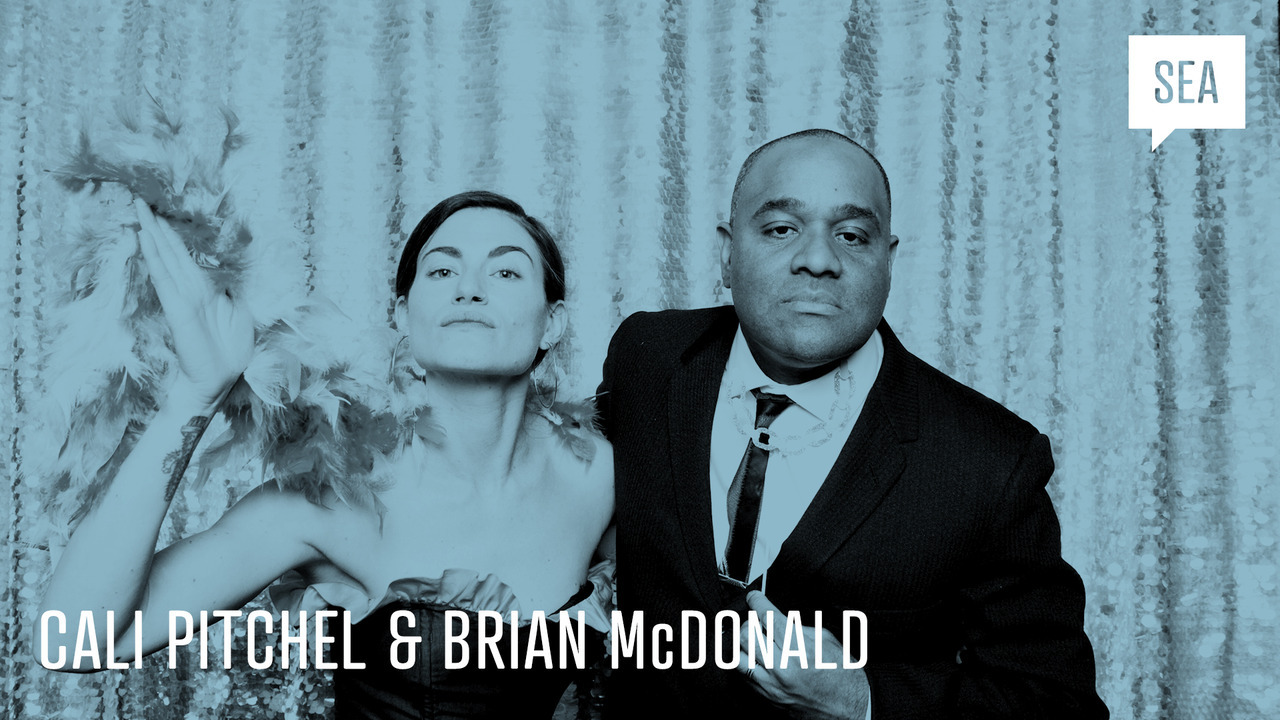
Our Q&A with February speakers, Cali & Brian who will be talking on the topic of Symmetry and Structure in Storytelling
Brian McDonald, Chief Storyteller at Belief Agency
1. How do you define creativity and apply it in your career?
I think “creativity” was a word created by people who weren’t creative, because for creative people it is just the way they see the world. Most people have access to their own creativity. It’s those who are able to push-through their self-judgement who can exercise that creativity. When we say creative, we usually mean the arts—but there can be creative electricians and creative doctors.
2. Where do you find your best creative inspiration?
The world is full of inspiration. Drawing on it is really just a matter of being an antenna, open to what the world offers.
3. What’s the one creative advice or tip you wish you’d known as a young person?
The way that you think is good enough.
4. Who would you like to hear speak at CreativeMornings?
I would love to hear award-winning novelist and University of Washington English professor, Charles Johnson, speak at CreativeMornings. Johnson is an African-American scholar and the author of dozens of novels, short stories, screen-and-teleplays, and essays. He won the National Book Award in 1990 for his novel, Middle Passage .
5. What are you reading these days?
I’m currently reading Alex Haley’s Roots: Saga of an American Family. It’s one of the most important books of the 20th century, especially as a lens for racial and political history. I’m working on my memoir right now, and I want to write something just as enduring. I aim high. I always have a high-water mark when I’m writing or directing—it’s why I have a Schindler’s List poster on the wall in my office.
6. When you get stuck creatively, what is the first thing you do to get unstuck?
Being stuck is just being afraid, and fear is more often than not a liar. When it comes to being creatively stuck, it’s usually a fear that the reality of what you can do doesn’t match what you have in your imagination. You don’t actually overcome this fear, but in naming it you allow yourself to work through it. You just push through. It’s about endurance. Can you allow that fear to energize rather than block you?
Cali Pitchel Schmidt, Creative Director at Belief Agency
1. How do you define creativity and apply it in your career?
For a long time I idealized creativity—I thought it was something you either had or you didn’t. And I did not have it. I was in a field (academia) that did not fit my narrow definition of creativity, so I was unable to see myself as creative. Creativity, in my mind, was for the arts. If I couldn’t paint or draw or sing, I couldn’t possibly be creative. But over the course of my career I’ve come to learn that was patently false. I believe creativity is a democracy—it’s available for anyone who’s willing to look for it inside themselves. Anyone who is willing to widen their aperture. The hardest work is in creating the conditions for your creative expression to flow freely.
2. Where do you find your best creative inspiration?
I’ve always been a keen observer—I’m taking in all the data, all the time. At times all that sensory data can be overwhelming, but it also keeps me open to finding creative inspiration everywhere. That’s the key: be open. When you’re open, you can find inspiration in the unlikeliest of places.
3. What’s the one creative advice or tip you wish you’d known as a young person?
I wish I could have shed more of my self-consciousness when I was younger. Self-consciousness, for me, has always been the enemy to creativity. I still have to remind myself to be more interested in what I’m pursuing than in how others perceive that pursuit.
4. Who would you like to hear speak at CreativeMornings?
I’m so interested in the changing nature of the marketplace and how more and more consumers are expecting the brands they buy from to effect meaningful social change. I would love to hear from a behavioral economist or a cultural anthropologist on how this happened, and what we can expect to see as the way we market our goods and services evolves to meet these demands.
5. What are you reading these days?
I’ve been reading a lot lately. I usually go through seasons where I’m consuming different kinds of media, and right now it’s books. (Sometimes it’s all Netflix. Other times it’s all WikiArt.) I’m currently reading a book of essays by Camille Paglia titled, Provocations: Collected Essays . I’m also working my way through some Taoist texts—which makes me sounds far more actualized than I am. 90% of it doesn’t make sense to me, but then I’ll read something that will resonate so deeply it feels life-changing. I need all the remove from my ego I can get, and I find that the more I can respond rather than react, the better everything gets—especially my ideas.
6. How does your life and career compare to what you envisioned for your future when you were a sixth grader?
In elementary school I wanted to be the President—which should surprise no one who knows me. And although I’m not living the life I imagined at age 11, every stage of my life and career has surprised me in the most exceptional ways. What I’m doing today I couldn’t have envisioned this time last year. I love leaving room for possibility and being open to different paths and opportunities. I started my career in academia, and I had no idea I’d end up as a creative director and organizational consultant. The most valuable lesson is that every experience, however diverse, can move you toward that thing— what you’re best at.