Next Dublin speaker

Niamh Barry

The Tara Building

More info

Meet our Musician: ROE

Meet our Musician: ROE

Our musician for the month of April is ROE. Devastatingly sincere and relatable, ROE is a songwriter that pours her heart into every word that she writes. Her work spills truths from her own life, and from speculations on the planet on which we exist. Hailing from Derry, NI, ROE left college before finishing to travel the world playing festivals and to focus on writing songs that felt real. Her 2020 EP ‘Things We Don’t Talk About’ saw ROE cross 1 million streams on Spotify and is the culmination of 4 years of relentless writing, releasing and touring as a completely independent artist.

We sat down with ROE to talk about all things creative.

What does our monthly theme of procrastination mean to you?Procrastination is, for me, taking time away from something that you love just to make it better. I’m one for procrastinating all the time and then whenever I finally sit down to do something it works out really well because I’ve taken that time away. People perceive it as a negative thing, but I think that having that time is important.

What do you find most challenging about the creative process?

Probably the hardest thing for me is actually taking the time to sit down and write and keep going with this thing that I love. This is my career but also, it’s therapy for me; sitting down and writing and knowing that it’s good for my head. So whenever I procrastinate I know that I’m procrastinating because I can feel it in my brain.

You’ve quite a close-knit team, I love that you guys are all friends and that’s such a big part of who you are as an artist. So is the solo time where it’s just you in your room, writing, is that where you find committing to doing that most difficult?

Yeah because there’s nobody there to push you on to do it, you’re literally relying on yourself to do this thing and you know that it’s going to take maybe an hour or whatever. And I’ve started this technique where you put a timer on your phone for 15 minutes to do something and that’s been very helpful. I know that it’s only a tiny section of time that I have to do the task for and then you end up doing it for far longer because you’re really into it.

But whenever I have the team around me, I feel the buzz. Whenever they’re around you and everybody is kind of gearing towards the same goal really. It brings you out of your shell as well, because when you’re having the craic with people and you’re all thinking about the same thing and they’re all like-minded and just want to get the best out of everything that you do. Especially whenever it’s my own stuff, because everything I write is written by me and it’s kind of my baby, so it’s nice having people around that make you kind of think that OK, I’m an actual professional musician. And they’re just there to support you the whole way and I love that.


Is there any experience in particular that you’ve been reminiscing about? You know those moments that you live in?

Yeah, we were on tour just before lockdown happened up here. Literally just got back home in time and we had the show down in Dublin in Whelan’s Main Room and before that, we’d sold out upstairs and that night was just insane, and it was crazy because we were literally on stage and then we had to go back home up to Derry.

It was just a complete rush the whole night and it was just the best craic and I miss the connection with people. I miss the whole buzz after the show and just talking to people after the show and just chatting to people about their own experiences.

This whole point in life just feels so surreal because everybody’s taken a pause in everything that they do, especially in the creative sector and it’s one of those professions that are really tied into your personal life as well. We were chatting about how like most of my friends, if not all of my friends, are involved in the music scene or the creative scene in some way. And I miss that being at a show with them so much and I miss just the thrill of being on stage and being able to perform my songs with people.

Do you think that mental health is the main message in your songs that will keep cropping up and is what’s really important to you or are there other themes that you’ve started to bring into your writing over the past year?

For me, writing is really personal. It’s kind of like a diary, a scary diary, but I use writing as a form of therapy, so everything that I write is very much linked to my mental health and the things that I go through, and people really close to me go through. And it’s a way of getting these thoughts out of my head without having to talk about it because I am the worst person, as much as I sing about it, I’m really bad at talking about my mental health and actually opening up to people.

So I think if I can do that in a way that helps other people as well as it helps me. That’s the aim for me. You know it’s just to connect with people and have a little bit of hope because all of these songs that I write, they might have really sad topics behind them or themes behind them, but I get to do what I love because of them. I get to connect with people, I get to talk to people and get to make friendships and it came from all of these mental health songs that I’ve written about. It makes me realise how important it is to talk about these things, especially if you have the strength to.

I still get terrified before I go on stage because I know that I’m pouring my heart out on stage in front of all these people and I have no idea how it’s going to go each night, but it’s really important to me to keep spreading that message of: It’s OK to have mental health issues. Everybody has some form of mental health issues. Nobody is perfect and it feels like a very human thing to communicate. I don’t understand why there’s such a stigma around it.

How do you feel about the narrative that if you write music, you don’t need therapy, that the music is therapy and is cathartic?

I think if you need help, get help. Your music isn’t going to suffer because your mental health is getting better, and I think that’s really important for people to understand.

There’s this narrative of a tortured artist and you have to be suffering to make good art, and there’s no logic in that. There’s no reason why you can’t better your mental health and feel happier and still write really good songs.

If you need help, get help. Your music isn’t more important than your own mental state.

This year loads of people have been learning new coping mechanisms… are there any rituals that you do before stage or daily?

It’s something that I’m working on. I’ve been reading into it a lot more. There’s this book called Sound Advice that I’ve absolutely been loving and it’s about creating rituals, especially with your bandmates, because you need a connection before you go on stage, that’s why people play ball games or silly word games before they go on stage, to get that connection and bring the best onto the stage.

But before all this, I definitely took maybe 5 minutes before I went on stage and just didn’t talk to anybody. I’d kind of take the time for myself because of the nature of the songs. I had to be in the right mindset to go sing them before, without breaking down onstage.

It’s talked about all the time, how exercise helps your brain, and so I’ve started running and doing yoga a lot more and not for any physical benefits. But just because I know that it’s going to help me in the long term and my brain.

What habits do you think you’ve had to unlearn over the last few years?

Finding my voice was difficult. We’re in the middle of recording my album and this time I’ve taken the reins a little bit and realise that I like having a hand in everything in every aspect of my music. So, I’m definitely a lot more assertive than what I was, maybe three or four years ago whenever I was just starting out. And it is something that you learn – that you have a voice. And you’re allowed to use it, even if you’re young.

Some of the youngest people in this industry are the ones with the most inspirational ideas.

Always remember that you have a voice and you’re allowed to have that creative expression and guide your own music like it’s your music, so don’t let anybody else take charge of it.

You put up a post recently saying that you were really excited about your new tunes and how they were really different… in what way are you excited about them being different?

They’re very true to what the songs are about. It’s shown in my writing how I’ve evolved as an artist. Practice makes everything better, so I’m really proud of these songs and I’m really excited about them. The whole mental health thing has carried over a whole lot and I’m glad that it has and I don’t think I’ll ever step away from talking about things like that.

There’s been so much talk about how the music industry needs to step up, and I think it’s really important to talk about these things … what do you wish people knew about being a musician that isn’t always visible or obvious?

All of the hours that go into and everything that goes into behind the music. Whenever people hear your music, it’s a finished product. It’s all shiny and bright and they don’t realise how much has gone into the thought, the artwork or the production or the videos and all that aspect of it as well.

I think it’s really hard to see music as a nine to five because you always end up coming up with ideas and the best ideas that I have always come at like two in the morning whenever I’m going to sleep, and I have to roll over and write them in my notes app or else I won’t remember them in the morning.

Is there anything else you would say about your new tunes?

I’m being very mysterious at the minute! We’re working away trying to get everything done for my debut album and it’s the first time that I’ve had so much space to sit with every aspect of a project without shows in between. I want it to be something special to me and I think putting in the time into it is making that real.

What do you hope for the music industry going forward, what changes would you want to see?

That it’s more of a gender-neutral environment, especially when it comes to radio because I think everybody has seen the disparity when it comes to Irish radio at the minute. I want to see more opportunities for women in the music industry that aren’t token, that you’re not the only woman on the line-up.

Also more transparency. There’s a lack of transparency when it comes to a lot of the industry stuff and I know my manager, Liam, he’s been great at the minute because he’s started this Instagram page all about the industry and everything you need to know about labels, publishers. Everybody seems to keep to themselves and I wish that there was less of this competitive nature. There’s room for everybody to get the opportunities that they deserve and there shouldn’t be this need to be better than somebody, because we’re all in this.

I want it to feel like more of a community than competition. I feel like if there was a worldwide community of musicians and everybody in the music industry was helping each other, that would be the day.

I think if it was more accessible and more open to young artists, people wouldn’t be as scared or feel as if they need somebody else to know all this stuff. They wouldn’t be taken advantage of. There needs to be more education when it comes to that, especially when it comes to the younger artists.

You can check out ROE’s music here.

image

Our musician for the month of March was the incredible Susan Quirke. Susan is a singer, songwriter, musician, meditation teacher, and also a multi-award-winning social entrepreneur for her work in the field of wellbeing and mental health. Originally from Oola in Co. Limerick, Susan is now based in Lahinch on the west coast of Ireland in Co. Clare Ireland. On her music journey so far, she has released 4 original singles alongside 4 music videos, achieved an iTunes No.1, and played at venues throughout Ireland, the US and Australia. Her debut record ‘Into the Sea’ will be released on April 23rd, 2021. We sat down with Susan to explore her relationship to creativity among other things. 

What does this month’s theme of Ripple mean to you?

I live by the ocean in County Clare. Every day I watch the creation and movement of the waves rippling to the shoreline. Nature’s intelligence is always moving through us. When I feel this in my heart and surrender to it all peace flows in and I know everything is going to be okay, that all is perfect. There is so much wisdom in the ocean. I sing to this in my forthcoming album ‘Into the Sea’.

You have done so much work in the areas of mental health, meditation, and social justice. Could you speak on the importance of living a life where all of those are linked?

I see everything and everyone as being interconnected. We’re all inhabiting this earth in a giant vast soupy ocean of intermingling energy. When there is suffering, we all suffer. When love flows, there is a butterfly effect and that flows out to the collective too. We are in a continuous dance of evolution together. That is where meditation comes in for me. It cultivates a strong pipeline from the top layer of the ocean where it can be choppy and busy (like our minds), down to the depth of the ocean, our deepest nature, our deepest Being, where there is a greatest stillness always there. In this life, I think it is vital we look out for each other which everyone does in their own different ways. I campaign and advocate where I can as well as doing all I can to support others to take care of their minds and hearts through my meditation teaching. We also cannot care for each other unless we fill up our own cup first and that is something I had to learn the hard way over the years.

Is there any particular environment that you feel your musical creativity really emerge or do you find it quite easy to access?

It emerges when I give it time and space to emerge. Most of the songs that have flowed through me came when I went off-grid and dedicated a week or month to songwriting. I booked a house by the ocean one time and a bunch of songs came through. I also spent a couple of months songwriting in northern California and tons more came. I’m a night owl too and love playing late at night when the world is asleep, there’s something special about that time.

image

Your new album ‘Into the Sea’ is out on April 23rd. Could you let our audience know what was the most enjoyable part of making the album and where you felt most challenged throughout the process? 

I loved every aspect of making the album. Being in studio was pure bliss. My eyes sparkled so much I thought they were going to explode out of my head. The fact that I worked with some of Ireland’s finest musicians, heroes of mine, was mind-blowing. I also co-produced the album so I had to really be strong in articulating and expressing what I wanted. I had a crystal clear vision for the album, I could hear the exact sound and production I wanted in my head and I have realised that sound, thanks to the team of beautiful people involved, which is a joy. I feel I have also grown as a result, and it has reminded me to enjoy the process of creativity and not to get too focused on the outcomes. Holding the record in my hand is a gorgeous thing, and whatever else flows is a sweet cherry on top.

At the moment you are very much in the singer/songwriter and folk sphere. Do you think there is any other genres you might like to try at some point? 

I have a couple of real indie banging tracks on the album too, especially the Embrace. That speaks to the rocker in me, and all those endless hours listening to rock and indie bands growing up head banging in my bedroom and moshing at gigs as a teenager. I’d love to do a bit more of this type of thing but I’m also drawn to electronica and dance music. I would absolutely love to do vocals over a sweet sexy kickass dance track and perform that live at 2am in a giant tent at a festival. I also connect with many different indigenous cultures and wisdom traditions and love listening to sacred chants from many lands throughout the world.  

Reflecting on your journey with creativity and all the various places it has taken you if you could send a message to your younger self what would you say? 

I was extremely shy, lacked self-belief and confidence, and experienced a lot of challenges in my youth. My message to my younger self would be everything is going to be okay, you are strong as fuck and you’ve got this.

What advice would you like to give to women entering into any of the creative industries now?

I met Xavier Rudd, another of my musical heroes, at a festival in Australia and got chatting to him about wanting to make a record at that time. I wasn’t fully connected to my own power and my confidence in my ability to make it happen was low. He just eyeballed me and said, ‘Get it done’. Those three simple words lit a fire in my belly. Sometimes we just need that push, and the encouragement to know that we can do it. Too much over-thinking and self-doubting doesn’t help, but there are immense societal and systemic barriers many women have had to (and still have to) overcome. There is much more to be done.

With March being Women’s History Month, we would love to know about the women who have had a positive influence on your life?

My beautiful mother Mairead, my late grandmother Mary ‘Baby’ Coyle and my sister Caitriona have all inspired me in so many ways, as have my kick-ass friends who are also doing incredible things in the world. I’m blessed to have many trailblazers, activists, humanitarians and artists in my life. Also musical powerhouses like Sinéad O’Connor, Dolores O’Riordan, Bjork, Cat Power, Deva Premal and Patti Smith have inspired me. Spiritual teachers like Maja Angelou, Dr. Edith Eger, Caroline Myss and Tara Brach have also been great guides along the way. Too many to mention here, I could go on forever.

You can listen to Susan’s music here.

Meet our Musician: shiv

For February’s CreativeMornings event we are joined by shiv as our musical guest. 

shiv is a Zimbabwean/Irish musician based in Dublin. Having established herself as a house DJ, she turned her attention to where her passion truly lay in song-writing. 

Her music, though simple in its musicality, envelops you in her world. She uses her unique blend of R&B and Lo-fi Hip-Hop with elements of Soul and Neo-Soul to create music that is emotive and brimming with feeling. Shiv’s silky-sweet voice wraps you in a hug that carries her soulful lyrics and brings them to life over the warm, hazy instrumentals. 

Our music co-ordinator, Molly, sat down with shiv to ask her about all things music and creativity.

How did you transition to being a full time musician?

In a weird way, Covid definitely made that happen. Music has always been in my life but to be actually doing it full time with nothing else going on is great. This is my primary focus right now. Before Covid, I was working in a restaurant alongside doing music and when restaurants closed down and the Covid payment was instated, I had to rethink what I was doing. So, it really threw me into music. I was DJing for a little while before all of that because I didn’t really think of singing as a career path, necessarily. I felt like it was a one in a million kind of thing where only a few people are chosen and you have to be chosen by a major label. The old industry model. I thought DJing was a great way to express myself musically without necessarily being a musician or a singer but music was always part of my life.  

When my sister was getting married and I was the maid of honour, I was meant to write her a speech but I just don’t like public speaking. I don’t really enjoy speaking in front of more than about 5 people. It’s too much. So I decided I would write her a song instead. I put that song up on YouTube and my managers at the time saw it and suggested that I consider doing this as a career. Then I just went from there, slowly but surely building things up right and learning more about production and how to put everything together.  And yeah, I guess that sort of brings us up to now.

Do you use that song that you wrote for your sister’s wedding in your set?

No, I don’t use it. It was the very first song I wrote so I thought about putting it out, but I ended up going in a different direction. 

A lot of creatives find that their confidence fluctuates, as a byproduct of their creativity and their values being such a huge part of their work. Do you feel in a good place with your confidence?

Yeah! Before releasing my EP I was definitely in that turtle mode. It’s the pressure of knowing people are looking at you and that people have expectations of you. That was really hard to swallow I guess, and even though at the time I don’t think many people were looking at me or are looking at me currently, it just really felt like they were. I felt like I had something to prove. So, at that time it was difficult but because the EP is about all of that stuff, that was my way of processing all of it. 

I do feel like that’s behind me though. I’ve come up with coping mechanisms and would like to think that I have a more internal locus of evaluation, to put a psychological spin on it! Obviously that’s easier said than done though, you have to also be in a good frame of mind to be able to rationalise all of that.

So that was a big thing. Being able to just say ‘look, create for you. If you’re happy with it, that’s the important thing and if anyone else likes it - amazing, obviously that’s such a bonus. But if not, whatever.’ You haven’t lost anything by putting yourself out there, you know.

People need to like your music to spend money to see you perform those songs. So that’s definitely part of it. 

I think it’s just about finding the right balance between being sure that you’re doing it for yourself and appreciating people who enjoy what you’re doing. 

Your EP ‘Me 2 Me’ gives off that vibe of sitting in the grass in the summertime. At the same time, the tone of the EP is driven by introspection and exploring the insecurities that you described earlier. Are there still narratives that arise around your creativity that you have to work on silencing? 

Yeah, definitely. The big one is comparison, thinking things like, ‘oh well, this person is doing this so I should be doing it like that too.’ But then it can just cripple you completely from even wanting to try. With the process of making music, another negative narrative might be judging what I’m doing as I’m doing it but the more that I just ease into it and just do it, I stop thinking. At the very least maybe you’ve finished something. If it’s not good then maybe it might inspire something else that you make later on.

So, I think they are the two big things. Trying to get to a place where I just have patience with myself. Showing up is half the battle really, just showing up and doing it. It doesn’t matter what you come up with at the end of the day ‘cos it’s gonna all build towards something good in the future. Sometimes it’s just about having the confidence to know that if you’ve done it before you can do it again. It’s in ya! It wasn’t a fluke. Understanding that was a big thing. Patience and compassion for yourself.

We often hear creatives talk about how it’s so important to let yourself make bad work. It sounds like a lot of your creative process is just allowing yourself to sit with it and try things. 

Exactly, yeah. It’s not that you’re setting out with the intention of sitting down to specifically write a bad song. Even though I’ve heard Blindboy say that before on his podcast, he’s advised people to sit down and write something bad. I’ve never done that personally, but if I’m going to write a song or going to do some work on music, I do like to set myself a time where I just sit for two hours and just see what happens in that time. It could be bad, it could be good or it could be something that you draw inspiration from for future projects and future work. 

You never know what subconsciously comes from those moments. You could look back at a Logic session and be like ‘oh my god, that’s where I got the idea for that little melody line.’

Was there anything that has surprised you about your creativity over the past year?

I don’t know if anything surprised me, necessarily. Nothing’s jumping out at me that I was like, whoa, I didn’t know that. But I did have a realisation around discipline and how it’s just so important. If you’re disciplined in every other area of your life and you have a routine set up, then it leaves space to be free with your creativity which is how it should be. 

I guess I did just realise how important discipline is and how important it is to do at least one creative thing a day, whether it’s a journal entry or a poem or drawing something. Also, making sure you go on some little adventure to the shop or for a walk because you end up soaking up things that you didn’t even realise, or making new connections that you wouldn’t have made before. 

It’s so easy to just be stuck in the house and stuck at your piano or your computer forcing yourself to create. The space outside of where you create is just as important, those experiences where your conscious mind is off and your subconscious is ready to pick up on those little bits and bobs, those moments are really valuable.

The theme for this month’s CreativeMornings event is Divergent. What comes up for you when you think about that word? 

At the moment I’ve been thinking a lot about the building racial situations and everything that’s been happening around that. I feel like being mixed race is a weird one because you don’t really fit into either category. It’s like you’re too white to be black and too black to be white. So I definitely feel like that’s such a divergence from the norm. That’s how I’m finding myself at the moment, but not necessarily in a negative way. I’m just something different, I’m a diversion from what is the standard on either side of the spectrum. 

It can be really difficult to know when to include something so personal in your art, if ever. Especially with things that are so fresh. Do you keep those things in your life separate until you know how to approach them or do you tend to dive in? 

I think you definitely need to take time to process things a little bit, even though writing does help with processing. But sometimes when stuff is too raw, I don’t feel like sharing it unless it’s completely just something I’m writing for me, but even just seeing it on a page sometimes is too much. 

I have been writing about it. I feel like I have a lot to say about it at the moment so it is coming through. But you do need to figure out what you want to say and how exactly you feel about it before you can really put pen to paper and make a song out of it. 

Your music currently sits in that soothing R&B, summers day soulful genre. If you could click your fingers and jump into another genre for a day, which one would you gravitate towards? 

That’s an interesting question. I wouldn’t deviate too far from R&B and soul. I think I would happily be a rapper or a jazz musician, if I could do that. Then I’d love to be a house musician as well because I did DJ for a while and I loved it. Sorry, that’s three!

DJing must have been so fun. Was that your full time gig?

No, I was doing it on the side. I used to do two nights a week. I had a residency in Berlin Bar on Dame Street. DJing was fun, it was a nice way to make money and it was just a good buzz but when I needed to take the next step to make it a bit more regular, I couldn’t really find the motivation to do that. That’s when I knew it was just a hobby, you know. I was thinking, ‘oh maybe I could do this full time,’ but then I don’t think I could be excited to DJ full time. It’s definitely fun though, I do miss it. 

Your visuals are such a well matched extension of your music. They portray that same warm and authentic sense of self that we hear when listening to your songs. Is there a particular way that you approach them or is it just about going with what feels good in the moment? 

In the beginning, I didn’t have a budget or any support so it was all about getting friends on board and explaining what I had in my head. It was about saying, ‘let’s just put something together and see what happens’. I didn’t really put too much thought into any of them, especially because I don’t come from a visual background at all. It’s not my comfort zone, not one bit! So, I just wanted to put across whatever I could.

Moving forward, I would love to get a bit more professionally and creatively involved in the visual aspect because I feel like it’s such an important part of the whole story of the music. I know it can engage a whole different audience, so I do think it’s important. Possibly a little to my detriment, I haven’t put enough effort into the visuals, but I also feel like sometimes it is just about what feels right and fleshing out a basic idea that you have in your head. And like all aspects of creativity - it’s about getting started with an idea. Then more ideas just kind of flood in once you get the ball rolling, you know.

–You can catch shiv on Spotify here.

To signal the new year and to highlight the wonderful musicians we’re welcoming each month here at CreativeMornings/Dublin, we’ve decided to revive our blog. Each month, we’ll share an interview with our musician.

This month, Dani Larkin is taking to the stage. Dani hails from the Armagh-Monaghan border and is widely receiving praise as one of Ireland’s finest songwriters. A natural storyteller, her music is heavily inspired by the folktales she was raised on, intertwined with elements of traditional melodies and rhythms from around the world. 

On the live music scene, she’s opened for Rufus Wainwright, Lisa O'Neill and performed at Ireland Music Week, Output, and at Other Voices Belfast and Ballina. This year, she’ll debut at Folk Alliance International and release her debut album, ’Notes For A Maiden Warrior’. 

Michelle sat down with Dani to ask her all about music, creativity and everything in between.

I’m going to kick off and jump straight in! I’ve read that you use music as a baseline for peace-building, is that right?

Big question to start with but we’ll for it!

Where does the story begin? I did a Masters in International Conflict and Cooperation in Scotland and came back to Belfast in 2015 and I realised it was all well and good sitting in an academic environment talking about change and conflict and thinking and writing about all of the ways change can take place. But for me, I realised music had to come in there somewhere.

It began as an absolute need for myself to reconnect with myself and realise that writing things down and thinking wasn’t the only way to change things. That then opened a new world for me. I did an internship with an organisation called Beyond Skin and I learned how to transform conflicts through sound and through songwriting. I remember my very first day; I was very nervous, working with various school groups from throughout the North and I remember seeing the change in those young people from when we started the day to when we finished it. 

So I came away thinking not only are they energised but I’m coming away in awe of their energy. And that is, for me, that’s it really: purpose on the planet - making music and creating change. 

Q: Had you always played music or made music for yourself throughout your adolescence? Or was it something that happened around this time after you graduated?

Music is something that’s always been there. My mum’s family are musicians and I’m so grateful to them all. From when we were very young, we got together every Sunday and the people who could sing, sang and the people who could dance, danced and the people who could tell stories, told stories. Music for me was something that was very living and very much a part of my life for as long as I can remember.

I started making music in 2013 before the Masters so that first year of writing and performing music for myself was so explosive. I hadn’t encountered anything like it and I can honestly say that when I started making music for myself, that’s when I started to uncover things about myself.

It’s a gift for me, it’s served me so well. It’s brought me to places I thought I would never ever get to go. And it’s allowed me to delve into worlds that are soulful that are full of the soul and are full of magic and I think that’s really beautiful. Maybe sounds quite naive. But it’s just the truth. 

Q: Do you think then that creativity and creative pursuits can be a catalyst for change? 

Yes, unequivocally, unequivocally. I love kids, I love working with kids. I love how creativity can really bring out the childlike imagination in ways that adults, we seem to starve ourselves of, for some reason. For me creativity and the power of the imagination are such incredible agents of transformation. It’s not only one kind of transformation, you don’t transform only once, it’s an ongoing process. If we can do that in healthy and sustainable ways and by having a bit of craic, why wouldn’t you?!

Q: What does promise mean to you? 

I guess the thing that’s so beautiful about promise, is that it’s almost of another age or another lifetime, like a child’s lifetime. I used to promise things a lot more when I was 5,6,7,8 than I do know that I’m 30. And I think there’s something beautiful in that. I think there’s something so freeing about being able to promise. 

If I think of it in my adult head it’s something to do with sincerity. Sincerity for me is acting according to one’s values or morals. 

Q: Your album is coming out in Spring, is that right? 

Do you know what? I’m just going to be brutally honest; I am in awe of the album and how it has developed from me just recording it in the studio in Half Bap Studios in Belfast last March just before we went into lockdown, to where I am now as a musician and a human being. And how listening to the songs on the album now and the different meanings that they have for me. 

It’s really amazing and I’m really excited. But it’s my first ever album.  

It’s called Notes for Maiden Warrior and the first half of the album is slightly more dark. And it moves into a kind of lighter, lighter side in the second half, and then it finishes in mystery. And for me that narrative or that kind of arc that is created through the album is something that is very true. 

This album for me is a homecoming and a discovery at the same time, so it blends this element of folklore and myths and story. But in a very personal sense and very connected to place and very connected to who I am and where I’m from. It’s taken me quite a while to grapple with all of those things like identity and home and place and I feel like this album really demonstrates that, and I hope people get a lot from it. I hope they enjoy it. And that’s being left in a state of mystery with the last song isn’t too disconcerting. 

Q: Do you think that the meaning has changed because the world has changed so much since you started writing it or because you’ve changed? 

Have I changed? I don’t know. Yes is probably definitely the answer. Personally, I’ve been in various swells of transformation for quite some time, sometimes related to pandemic, sometimes not. And as chaotic as the world is right now and as much pain and suffering and grief that we are experiencing collectively, I also have hope. 

I have hope because I can see things changing in ways that I have never seen in my lifetime before. I think that changes the meaning of the album for me a little bit, because it’s called Notes for a Maiden Warrior

The notes are the songs, not musical notes, but it’s my experience of the world and how I move through it and kind of like a guide for it. And the maiden is the first aspect of the three aspects of womanhood in Celtic mythology of Maiden, Mother, Crone. And warrior reverts back to the idea of Ulster, the Warrior Province. 

The world has changed so much from when the album has been recorded but I know that in sharing this music and in sitting in these songs that we can come together and create the spaces that we need to create to move on and move through this life. 

Q: Do you think if you started making it now, it would be a totally different album?

I don’t know because the album was made at the time and I had a very clear idea when I went into the studio of what I wanted it to sound like. I worked very closely with George Sloan and Half Bap Studios, he’s an incredible engineer and we co-produced the album together.

And the key thing for me was telling the story and keeping it simple in the way of not going heavy on production, not going in with lots of instruments and lots of synthetic sounds. It was very important that it’s like this album is guitar, banjo, harmonium and voice. That’s what this album is. And we use those things sparingly.

I’ve certainly found my voice as a folk musician as Dani Larkin with this album. The next album is being written and I can’t tell you how that’ll sound because I haven’t recorded it yet, but I get the feeling that these are the voices that sound true and it’s about keeping it as truthful as possible at every possible stage for me. 

 I took on Larkin as a surname in the summer of last year and before that, I’d been performing as Dani. But Larkin was my great grandmother’s maternal maiden name that disappeared when she married and it’s also that sense of coming home. Taking on that name, finding out that for me my album is predominantly voice and predominantly story and rooted in place. All of those things came together at the time, and so I can’t say if I were to do it now would I do it any differently. But I can certainly say that this album is a foundation and I’m excited for what comes next. 

You can listen to Dani’s music on Spotify here

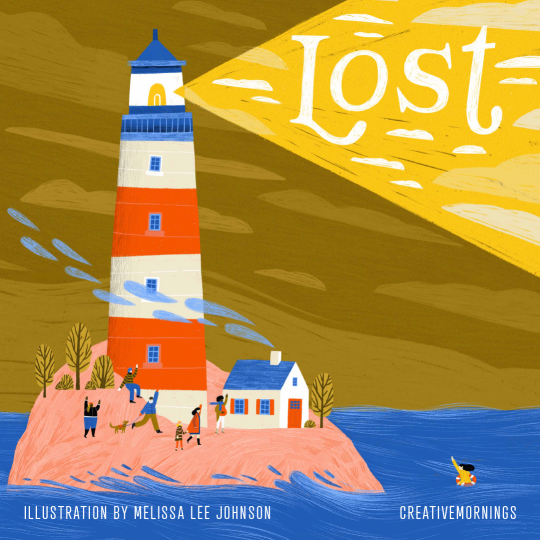
This month’s theme is Lost and we’re delighted to welcome Fiona Barry from Anew Support Services to speak on this theme. Anew is a specialist organisation working specifically with pregnant women and new mothers who are experiencing or have recently experienced homelessness.

Our wonderful sponsor, The Tara Building, has been working with Anew since 2018. This month’s theme, along with the shortlisting of Anew for a Charity Impact Award seemed like the perfect opportunity to invite Fiona to speak. 

Fiona has worked in the social care sector for nearly 30 years and has had a senior role in a number of large homeless organisations. Fiona has a huge amount of drive and wants to deliver responsive services to the people who need it most, and works to ensure people who are experiencing homelessness exit it and return to education and employment as quickly as possible. This is what Anew strives to do with the women who find themselves in need of additional support.

Our own Michelle O’Connor wrote & co-produced the following video with David Laurence for Anew to showcase the amazing work they do. The video was animated by long-time CM_Dub supporter, Guy with Red Beard Motion. Then, Tara Building Alumnus Clare Dunne provided the voice over.

If you get a chance, please cast a vote for Anew in the Charity Impact Awards, as this award will allow Anew to continue their great work while they are often overlooked by some of the larger, more high profile organisations. 

Meet our speakers: Michael Bosonnet


Michael spoke as part of our #CMCommunity event in August, and before he took to the floor, Michelle spoke to him about what ‘community’ means to him. Michael is a member of the Tara Building, and has found that community to be hugely accessible.

Michael has a business background but works in a creative way and has found that the creative scene in Dublin, while it is exciting, isn’t always entirely accessible. However, since joining the Tara Building, he has met all types of creatives: photographers, journalists, editors, stylists and music video directors.

He has attended most CreativeMornings in The Tara Building and really enjoys them. In particular, he loved Jennie McGinn’s talk for #CMPioneer in November 2017. In that, Jennie spoke about the foundation and fall of Opsh, and how their failure led them to new directions.

Michael will be speaking in The Tara Building, as part of Culture Night 2018, where he will discuss the use of data in business and creativity. He will talk about his experience of using data and human decision making with the understanding that combining the two is powerful, which is where his RADAR method comes in.

Find out more about Culture Night at The Tara Building here, and about Michael here.

Meet our speakers: Colette Henry.

Colette spoke as part of our #CMCommunity event in August, and before she took to the stage for her 2 minutes, she spoke to Michelle about what community means to her. Colette is a member of a few different communities, and one she set up herself is the ‘Kinder to Earth’ Facebook group that she runs in order to build awareness as to how we can be kinder to the earth.

‘It’s a community because we share ideas, innovations from companies that are doing well, and we support each others’ posts. I moderate it and encourage others to share, but I also know that there are many people who enjoy the updates and have made changes but don’t share posts or engage.’

Needless to say, World Clean-up Day is something that Colette is very passionate about. ‘It is most certainly a community experience - we are cleaning our community, then we sit and chat and have a quick drink together. It brings people together…’

Colette has been an avid attendee of CreativeMornings since March, and has also been a member of The Tara Building since she attended #CMCourage with Nick Kelly.

She said: ‘A friend invited me along to the event, and I had known Nick Kelly but hadn’t seen him since moving back from London, so I wanted to see him. I was also finishing up a full-time job and beginning to look at co-working spaces in Dublin and Tara was on my list to see. I was the 4th person to get a ticket on that Monday morning when they were released! I never actually even looked at other co-working spaces!’

Colette is a face regularly seen at CreativeMornings now, and it’s because she likes the vibe of the events. ‘I love to see people meeting up with friends they didn’t know were coming, to be introduced to new friends or randomly bumping into someone as they are queuing for coffee.’

For Colette, CM is all about the community: ‘The speakers are important, of course, but I think the most important thing is the sense of community and support.’

World Clean Up Day is happening on September 15 and everyone is welcome, you can see the event here: https://www.facebook.com/events/1790086267727164/

Elizabeth Moen was our musician for #CMCommunity, and Specky Scribbler sat down with her for a coffee and some chats about creativity and community.

—-

I got the opportunity to sit down and speak with Elizabeth Moen before she took to the floor for August’s CreativeMornings. We sat down and discussed all things creativity. From Iowa City, Elizabeth never had ideas of becoming a singer-songwriter, and only wrote her first song during her junior year of college.

Then, the songs just poured out of her and she could not stop. Elizabeth said that she was surprised when she wrote something, about how open she was with her lyrics. It was in writing that she was her most honest, with herself and with others.

While in Iowa City, she was hanging around with writers, going to parties that were full of writers, musicians and artists. They all encouraged her to continue doing what she was doing, and when she came to Dublin first, she felt even more encouraged.

The music scene is Dublin, and Ireland as a whole, is very vibrant. There are small, intimate gigs taking part on a nightly basis, and open mic nights where everyone is encouraged to attend, with no obligation to take part.

Elizabeth was in Dublin for a month, and she said that every night she played music, or watched other people. It’s what she loves about playing in Ireland: everyone is supportive. If they’re not playing, they’ll come and watch you play. Elizabeth says it’s a really nice thing, that everyone is working incredibly hard as artists, but still remains supportive of other artists.

Elizabeth’s booking agent for Ireland, Laura, asked Elizabeth if she’d be willing to play at CreativeMornings, and told her it was just a really good environment. As someone who is heavily involved in CreativeMornings, I feel it’s a really supportive space. Hearing others say that the events are supportive and the audience appreciative is wonderful.

It’s exactly what CreativeMornings strives to be, and is why we are up to the members of the community for the theme of Community. Dublin made Elizabeth go for it with her music, and the support she received here is something she has thoroughly enjoyed.

For Elizabeth, music is everything. When she’s not touring, she lives out of her car. Everything she owned she gave away, sold or is in her car. She has no steady place to live and nothing holding her back, which she finds liberating.

Having no ties to any one place has enabled you to come to Ireland and tour for a month, before embarking on a 3 and a half month tour of the United States.

Her latest LP, A Million Miles Away, was released on September 1 and can be streamed on Spotify. Attendees got the opportunity to listen to it before it was released online, and it was powerful, powerful stuff. Give it a listen and see what you think, you won’t regret it. 

CreativeMornings/Dublin open every event with live music from local artists. This month, Dowry will be performing ahead of Briony Somers.

Michelle from Specky Scribbler sat down with the voice behind Dowry, Éna Brennan to discuss all things creative in Dublin (and beyond).


How did you get the gig to perform at CM?

I was recommended to the host by a mutual friend of ours, Robbie Blake, of Tonnta. He suggested to Aiden that I might be a good performer and so then Aiden sent me a brief email and asked if I’d be interested.

I definitely was, and the context of the event made me even more interested. I’d heard about CM, more so the international branches, but I’d heard about them and I liked the sound of them and then watching the archive I saw how engaged people are.

Then when I was asked to perform, I like having to think about the ways in which my music links in with the theme of the event: intention.

My music is going to open up the conversation in the room and I like that. It’s something I’m really looking forward to.

How do you find the creative scene in Dublin?

I got involved in the creative scene/industry in Ireland initially through my social circles in university. Then I got involved in playing with bands, and with people who were in bands. So I initially started in the scene as a performer and then I began to appreciate performances based on participation.

What I love about it is that it’s so supportive. We all go to each other’s shows. We all collaborate with each other. Some people are in 5 bands. It’s also the collaboration between visual artists and musicians.

What are you most excited about for Friday?

The engagement. I’ve chosen music that fits the topic and the event is a very focused one. You can be dynamic as a musician, and adapt to the audience. From watching videos of past events I saw that the audience are respectful and engaged.

I’ll play music to fit a theme, a topic. It gets into the nitty gritty of that topic and it’s a more considered approach to other gigs. I’ve had to think about how I open up the theme of the event, the conversation.

I’m mixing instrumental pieces and pieces with lyrics because as literal as some lyrics are, there is a tranquility in non-linguistic pieces of music. They are evocative in different ways for different people without being imposing.

I’m just excited to get involved.

June’s theme is Craft, and ahead of our event on 29th June, our resident blogger, Specky Scribbler, met with our speaker, Gerry Scullion, to have lunch and pick his brains.


Gerry Scullion is only recently back in Dublin. He’s been back just over 2 months, after spending 12 years in Australia. He set up Humana Design down under, where he offered his human-centred design services to everyone and anyone who wanted them.

I’ll admit that when I heard that Gerry was a ‘human-centred designer’, I thought he coded things for humans. Like artificial intelligence or robots, or something like that. I guess human-centred design could include these things, but it also is a lot more.

When I spoke to Gerry, I had ideas in mind about what I’d ask him. How he came to be a human-centred designer, how he found CreativeMornings, what he thought about the creative community in Dublin. I basically asked him one or two questions and the rest of the time we talked about design, society and what we do.

Human-centred design is design that has people as its focus. Gerry said that being in a cafe was the perfect example of human-focused design. The services offered in a cafe are designed with people in mind, because people need to know how to react and interact with the different aspects of the cafe. That’s what he does. He works everyone involved projects to design a service for people in the way they need it.

This is human-centred design. It’s taking into account how every single human being interacts with the things that are around them. It’s the consideration of the complexities of human perspective into problem-solving.

The other thing I wanted to know, was what Gerry thought of the creative scene in Dublin at present, having left years ago.

He said that he would not have come back to the same Ireland he left, because he wouldn’t want to. He came back to Ireland because he saw potential in it, to become something great. He has been to design conferences here in recent years and he believes that design thinking in Ireland is onto something new.

Given that he’s only been living here for around 8 weeks, he hasn’t fully immersed himself into the creative sphere in Dublin. CreativeMornings is a good start, and his talk is sure to be a good one!

more