
“Think like a belonger, not an imposter.
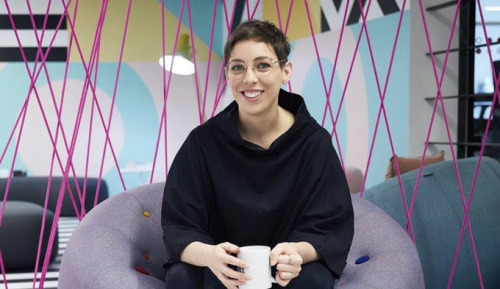
Lauren Kelly is a psychologist and designer. In 2014 she started BehaviourStudio, a behavioural design studio, working with and training teams at Microsoft, Coop Digital, The British Government, The Estonian Government, Hyper Island and more.Lauren is trained to recognise countless syndromes and conditions. But there’s a difference between studying something and living it.70% of us experience imposter syndrome. Maya Angelou and Einstein to name two. And Lauren is part of that 70%. She’s one of millions of people who doubt their accomplishments and have a persistent, often internalized fear of being exposed as a fraud.People have Zoomed in to Lauren’s talk from across the world. People who live thousands of miles apart have come together, many admitting to experiencing imposter syndrome themselves.Lauren works in behavioural design and uses behavioural science and design for positive behaviour change. By looking at imposter syndrome as a behavioural challenge, she can apply behavioural design tools.“Your imposter syndrome means you overestimate people’s ability and underestimate your own. They are no better. You are at the table. You deserve to be there.”Negative thoughts are the driving force behind imposter syndrome. If left unseen to, they can turn from a cloud of doubt into a dark, damaging shadow.“Instead of an imposter. You need to think like a belonger.”To think like a belonger. You need a belong statement. Something everyone can write and keep to hand for next time imposter syndrome creeps in.
A) ‘I’m great at…’ List three things you are great at.
B) ‘I feel imposter syndrome when…’ Pinpoint when you feel imposter syndrome, not your triggers.
C) ‘It makes me feel…’ Note how your triggers make you feel. To be aware is the first step towards change.
Then bring the three together to create you belong statement:
The next time (B)…. And I feel ©…
I will say to myself, I belong because (A).
“You aren’t alone. Other people aren’t more capable. Identify your ‘imposter’ triggers. And start to change them with your belong statement.”Words by Molly McGreevy.