Will wanted to “eff the ineffable and unscrew the inscrutable.” It took him five years, but he managed to do it.
Will tells the story of how he began by imagining an audacious outcome, and then mapped out the journey that ultimately led him to discover the alchemy of astonishment.
About the speaker
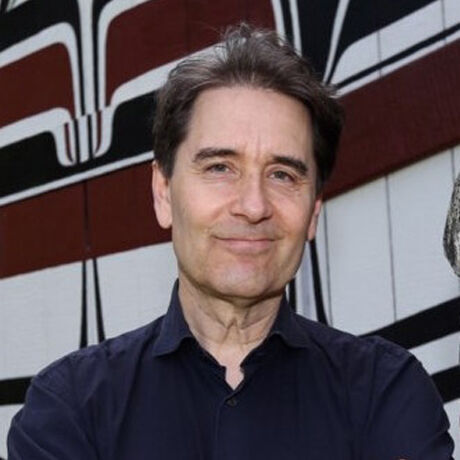
We're kicking off 2025 with speaker Will Weigler, an internationally award-winning theatre director, playwright, producer, and storyteller, and the author of a stack of books & guides on community-engaged theatre. Will looks forward to sharing the story of how he set an audacious goal of identifying that ephemeral alchemy that can create astonishment on stage, and then mapped out the journey that ultimately led him to discover it.
Will Weigler considers himself to be an exceptionally lucky guy, whose wandering journey through life has always involved theatre. At age 15, at the Reed College Theatre in Portland Oregon, Will produced and directed his first major production—a jazz/blues opera about a cockroach poet and an alley cat, based on The Lives and Times of Archy and Mehitabel by Don Marquis. These days he works locally, regionally and around the globe sharing his innovative approaches for enabling people in communities to turn their collective insights, cultural knowledge and wisdom into evocative and dynamic theatre performances. Much of his work focuses on advocacy for social and environmental justice, dispelling stigma, amplifying the voices of marginalized communities, using performance to illuminate the fraught legacy of colonialism, and fostering support for settler allyship with Indigenous communities and their cultural resurgence. Whenever he comes up with new ideas that he feels are especially useful, he writes books and how-to guides to share these techniques with others. Will earned a PhD in Applied Theatre at UVic, and is a graduate of the National Theatre Institute and Oberlin College in the US. He is a grateful visitor on the traditional lands of the Musqueam, Squamish, and Tsleil-Waututh peoples.
As usual, we asked our speaker some probing questions to give us a deeper glimpse into their life and relationship with creativity:
How do you define and apply creativity in your life and career?
I think of creativity as a way of seeing. William Blake once wrote, “The tree which moves some to tears of joy is in the eyes of others only a green thing that stands in the way.” Since I was a child, I’ve been blessed with an ability to see the wild possibilities in everything I find around me. To apply this into my creative work, I challenge myself and my collaborators to ask activating questions that will turn our openness to seeing and feeling into practical artistic choices. For example, when I am in the process of building some new work, two questions I always ask are: How will this work be beautiful? and How will this work be emancipatory? By “beautiful” I don’t mean “pretty.” I mean it in the broadest sense, the sense that theatre theorist James Thompson describes as the powerful “call of beauty” that fills us with wonder in that moment and compels us into a profoundly felt understanding of what we are experiencing. By “emancipatory” I mean asking how might we craft this story so that the power it holds to give us courage and hope and resolve can be woven into our creative work?
Where do you find your best creative inspiration or energy?
Really good writing always thrills me. When I read the vivid words of poets, storytellers or thinkers, or when I encounter the work of brilliant actors, directors, dancers, or visual artists, it always fills me with enthusiasm to go create.
What’s one piece of creative advice or a tip you wish you’d known as a young person?
I actually did receive this creative tip as a young person, and it has served me all my life. When I was a teenager, my acting teacher Jack Featheringill advised me that whether I was working as an actor or director or writer, whatever I do will be elevated if I look for and find the love in it. All art, he said, is a story about relationships. And in these relationships, no matter how off balance or in pain the people may be, no matter what they are choosing to do, from their perspective they are always desperately seeking love. If you can find the thread of their love for whatever it might be to them, you will always create memorable, compelling work.
Who (living or dead) would you most enjoy hearing speak at Creative Mornings?
I have been so deeply moved and enriched by the writings of the late Ojibway author and journalist Richard Wagamese. His work makes me realize that one can laugh and weep at the same time. Richard was only a few years older than me. How I wish I could have met him. I would have loved to sit in this audience and hear him speak to us.
What fact about you would surprise people?
When I was eight years old I managed to convince my mom to let me adopt a little raccoon as my pet. Every day for the next three years we were inseparable. He sat up in the front basket of my bike as I peddled around the neighbourhood, we shared my bottles of grape soda, and every afternoon we played in the woods that were right out the back door of my family’s house. One day he decided to wander off among the trees to make a life of his own. I never saw him again, but I’ve always kept a place for him in my heart.
How does your life and career compare to what you envisioned for your future as a sixth grader?
I knew what I wanted to do in my life from the time I was very small. When I was seven, I used to open our morning newspaper to the funny pages and then carefully cut out the Peanuts comic strips. Then, using the dialogue from the cartoons as scripts for ten-second plays, I cast neighbourhood kids as the characters and staged them in scenes that they would perform in our front yard for anyone who would stop to watch. I’ve pretty much been riding that same train ever since, but on a bigger scale.
How would you describe what you do in a single sentence to a stranger?
I wage peace.
What's the most recent thing you learned (big or small)?
I recently learned from some writing by the late Brian Doyle that the root of the word “humility” is linked to “humus,” as in the soil of the earth. But Doyle felt that genuine humility is not about lowering oneself down to the ground. He believed humility is “a rising up and a reaching toward something we can never quite touch yet must trust is there. […] Humility does not mean self-abnegation, lassitude, detachment; it’s more a calm recognition that you must trust in that which does not make sense, that which is unreasonable, illogical, silly, ridiculous, crazy by the measure of most of our culture. You must trust that you being the best possible you matters somehow… That doing your chosen work with creativity and diligence will shiver people far beyond your ken. That being an attentive and generous friend and citizen will prevent a thread or two of the social fabric from unraveling.” (from One Long River of Song: Notes on Wonder by Brian Doyle, 2019)
What keeps you awake at night?
Awareness of the overwhelming, wretched injustice that is destroying people’s lives right now, every day and every night, all over the planet.
What myths about creativity would you like to set straight?
The myth that creativity is somehow a special gift that one is either born with or not! That’s nonsense. Creativity is everyone’s birthright and is alive in all of us. The key is for each person to find the pathway that opens their access to it. A lot of my life’s work is guiding people to find their pathways.
Who has been the biggest influence on your life? What lessons did that person teach you?
A lot of how I have learned to walk in the world is due to my parents. My mother nurtured my love of words and wordplay and reading. She taught me the importance of paying attention, the value of learning to become present in one’s life, and she drummed into me that it is always worth it to take bold risks because: why not? My father encouraged me to savour what’s funny in life without being mean-spirited, and to recognize why it’s funny. To quote a line from one of his favourite movies, my dad taught me to know “the subtle, sneaky, important reason I was born a human being and not a chair.”
What are you proudest of in your life?
Theatre teacher Jonathan Louis Dent once wrote, “Imagine if we measured success by the amount of safety that people feel in our presence.” I believe that, for the most part, I have grown into becoming that kind of person and I am proud of that. I’m also proud of all the books I’ve written.
What’s the craziest thing you’ve ever done?
The summer I turned 17, I packed a rucksack, put three hundred dollars from my busboy tips into my pocket, and hitchhiked from my home in Portland to the Rainbow Family Gathering in Montana’s Glacier National Park. When it was over I hitched a ride, with no map or plan, north to Edmonton and then east to Nova Scotia where I stayed for a while with a beekeeper and his family. I hitchhiked back to Montreal, then made my way south and east to New York City, then west across the US to Los Angeles, north to San Francisco (where I was nearly abducted into a cult) and finally back to Portland, arriving home on the afternoon before my first day of classes as a high school senior. As always, the door of our house was unlocked. When I walked in, I saw that the whole place was empty. The house had been sold that summer and nobody knew how to reach me to let me know. Not to worry; it all worked out in the end.
What’s your one guilty creative indulgence?
I’m a sucker for watching science fiction, time travel, and superhero movies on the big screen, while eating a tub of buttered popcorn.
What are you reading these days?
I just re-read Elizabeth Gilbert’s Big Magic, which resonated with me this time just as much as it did when I first read it. I immediately bought copies to give to my 13-year-old niece and a few of my mentees.
What has been one of your biggest Aha! moments in life?
That story is going to be the basis of my Creative Morning talk.
Favorite quotes from this talk

Hosted by
Vancouver Art Gallery
Room 4East - 750 Hornby Street
Vancouver, British Columbia Canada V6Z 2H7
Date
Partners
LaSalle College Vancouver